






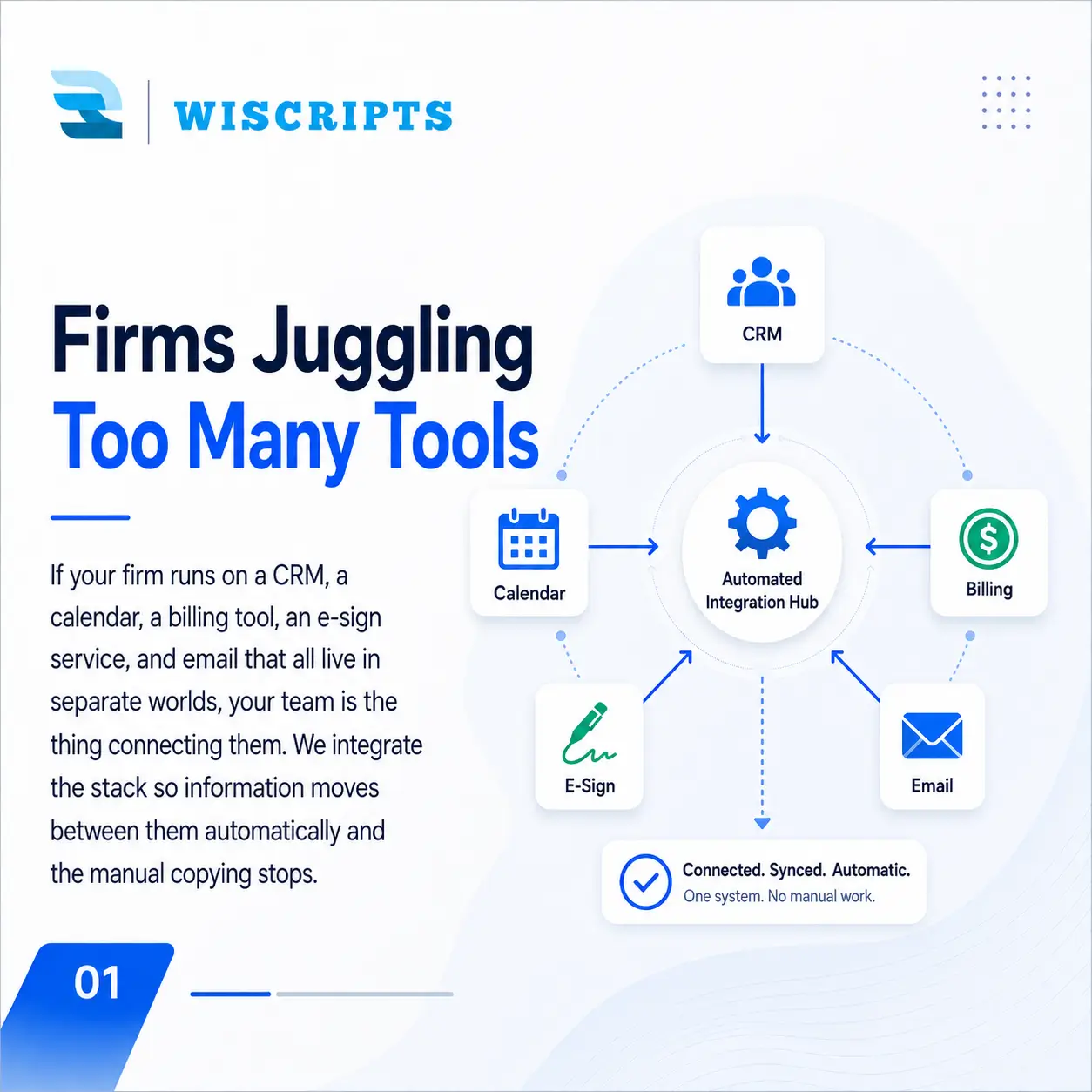
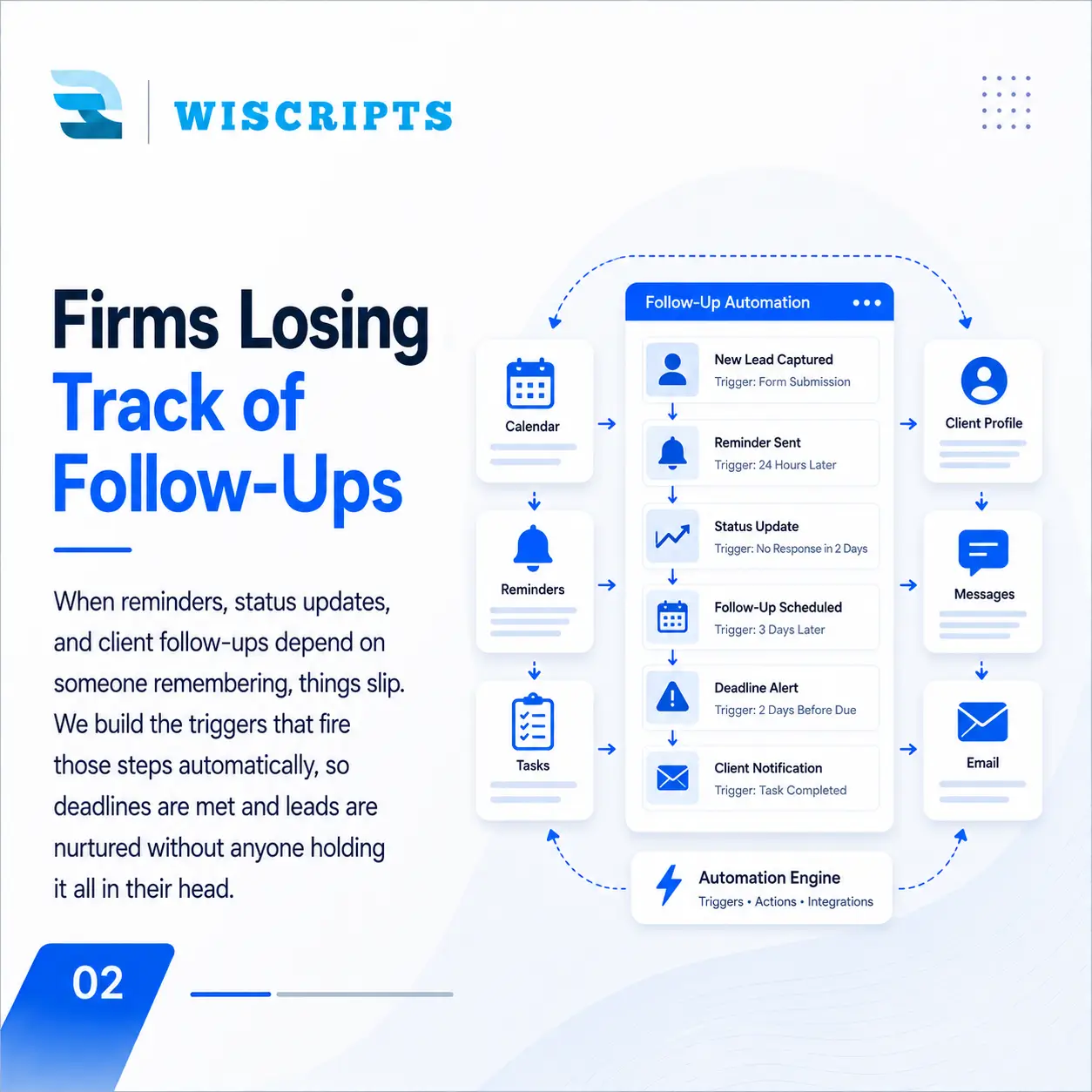
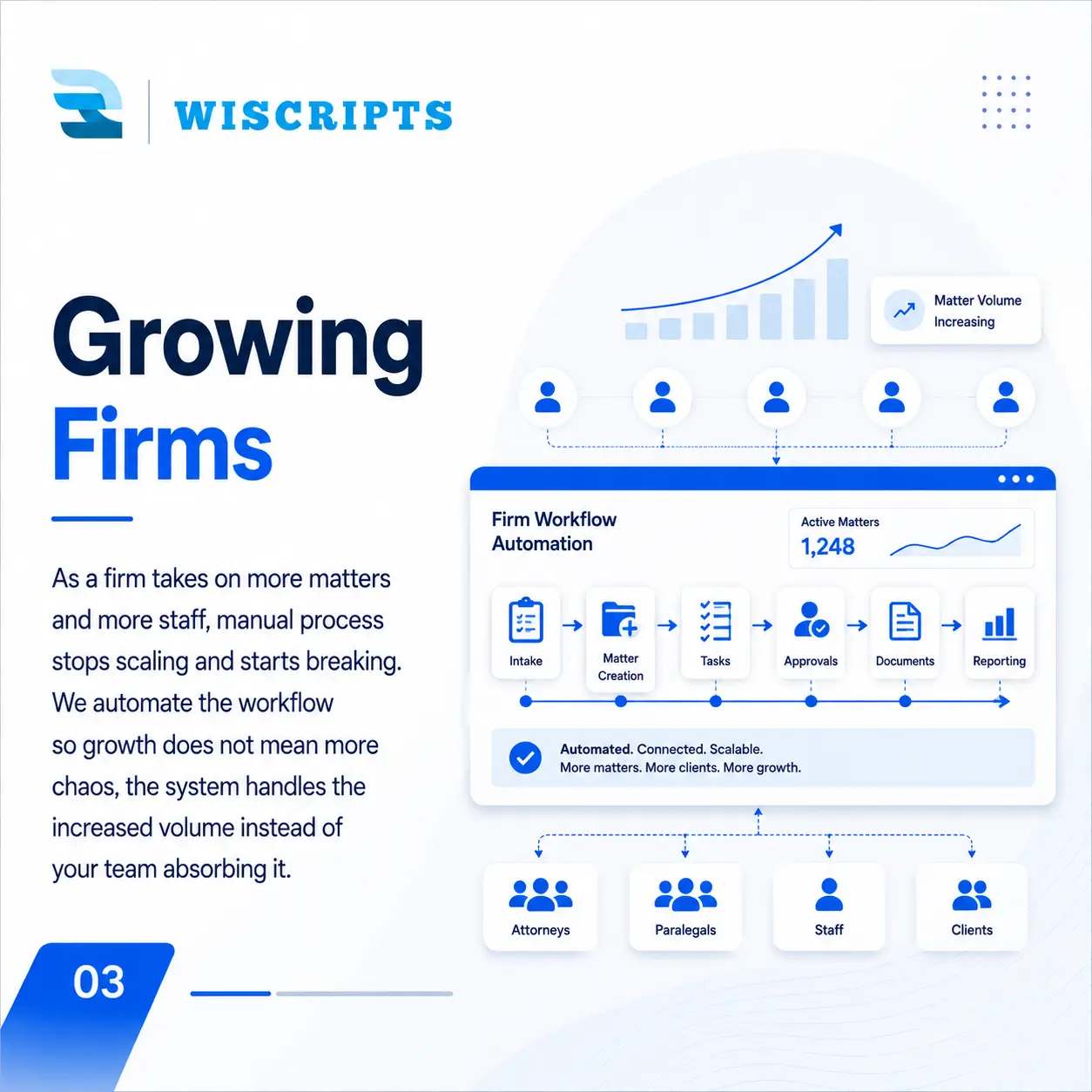













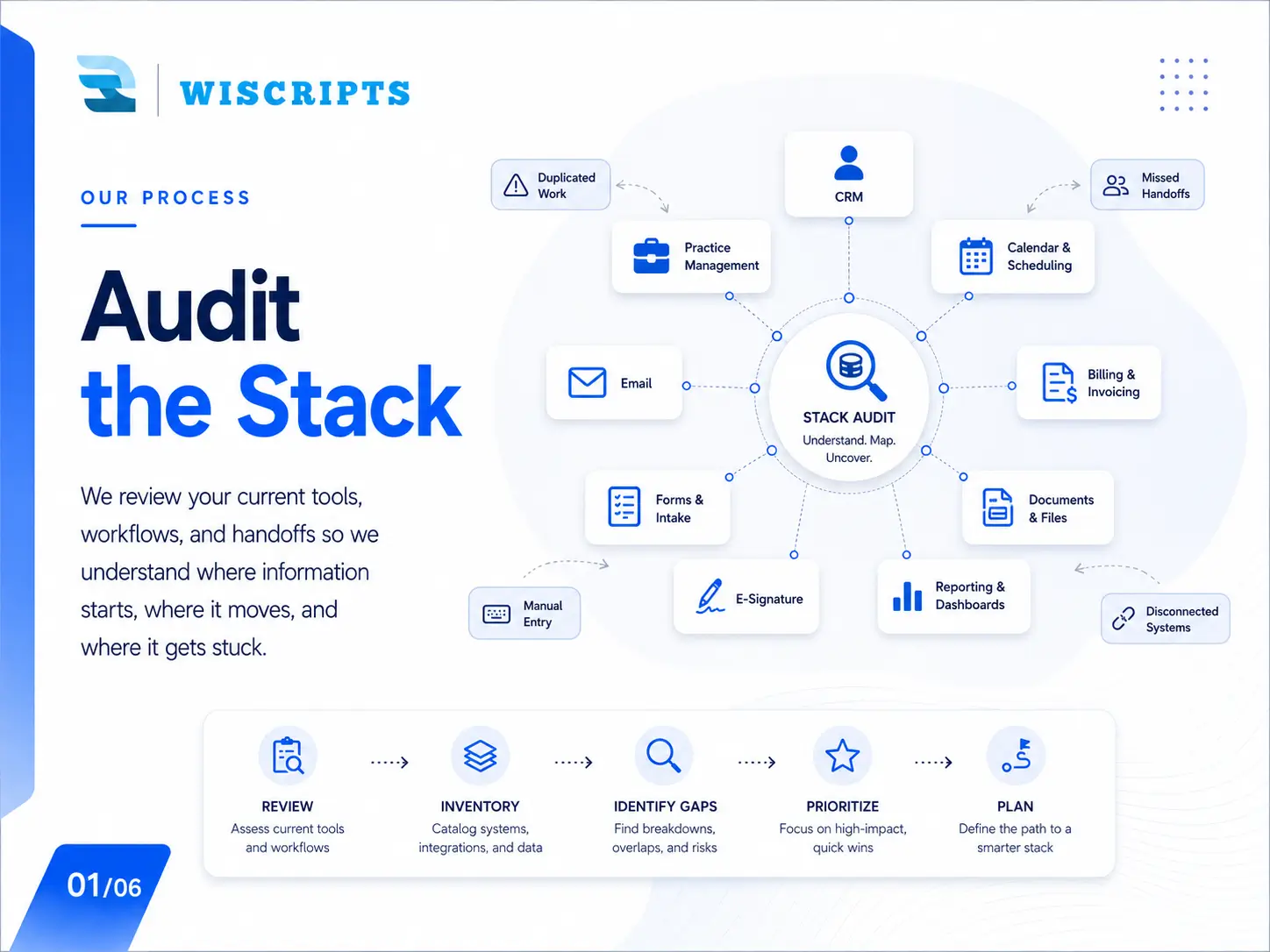
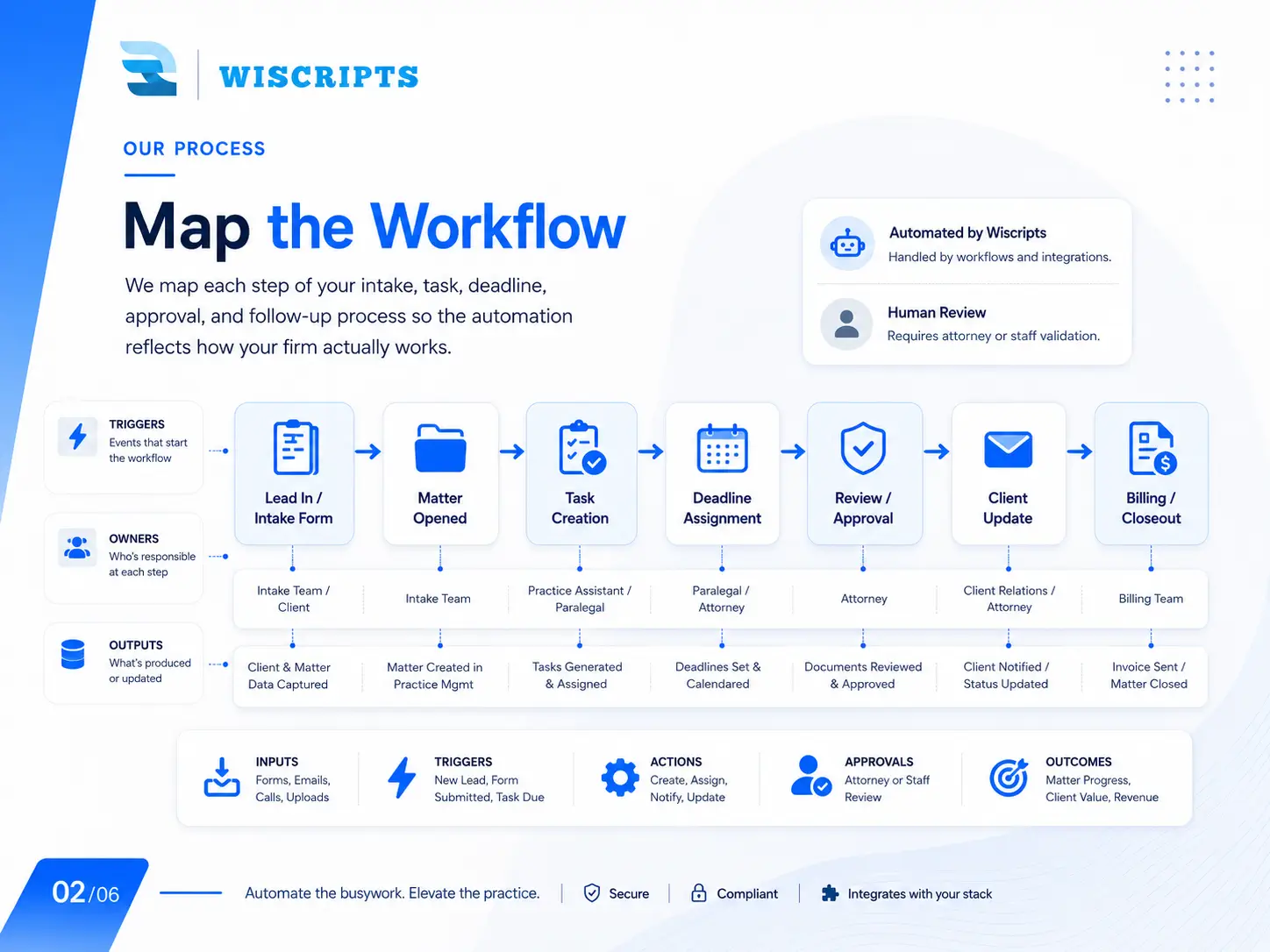
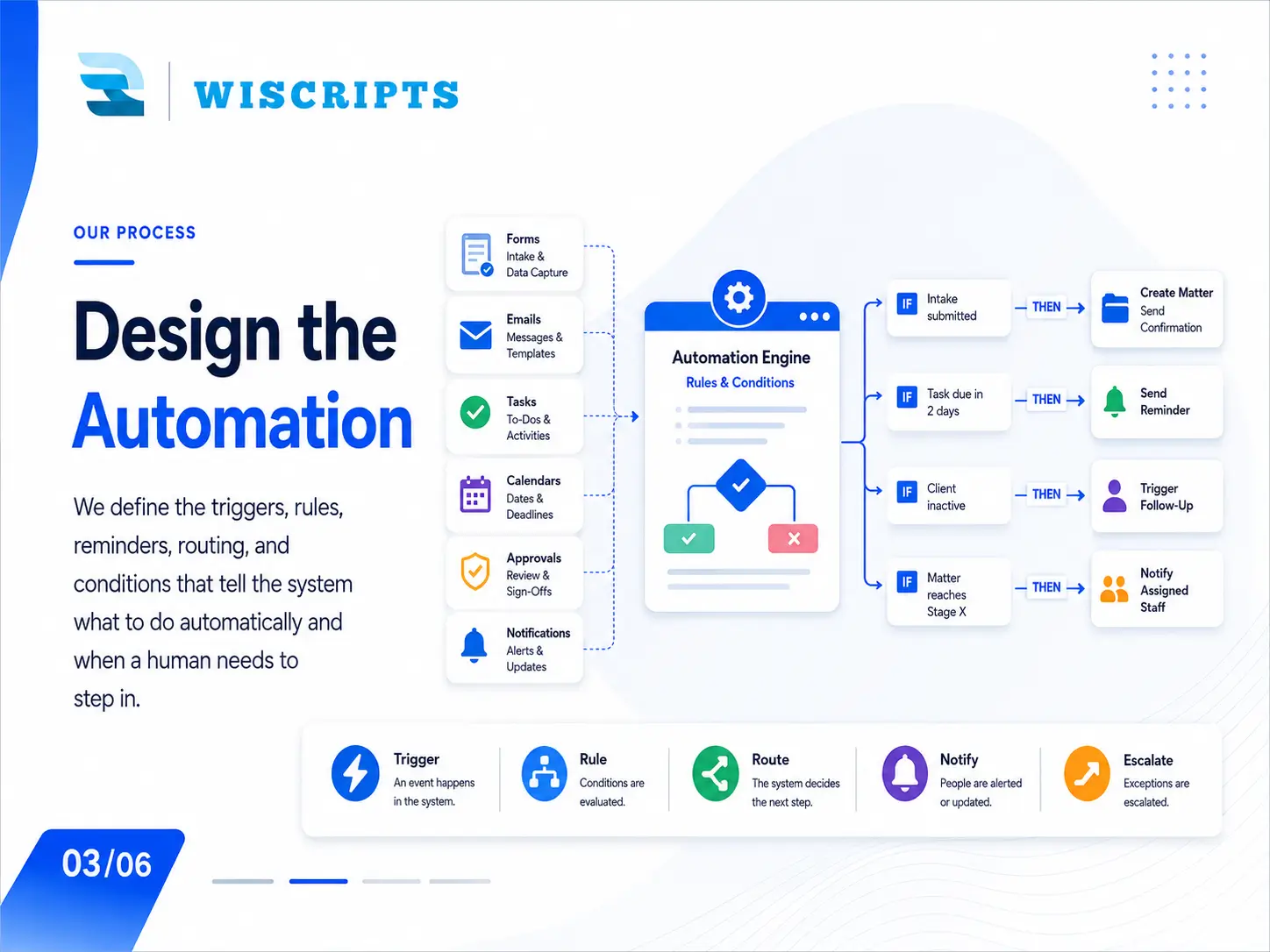





It connects your tools and automates the steps between them. Instead of your team manually moving information from one system to another, chasing tasks, and remembering follow-ups, the work flows on its own, a new lead creates a matter, a matter assigns tasks, a deadline triggers a reminder, a stage change sends a client update. The routine connective work that eats your team's day simply happens.
Document automation is about producing documents, turning the things you draft repeatedly into templates that fill themselves. Workflow automation is about the process between your tools, moving information, advancing matters, and firing tasks and follow-ups. One produces a finished document, the other runs the system around it. Many firms use both together, but they solve different problems.
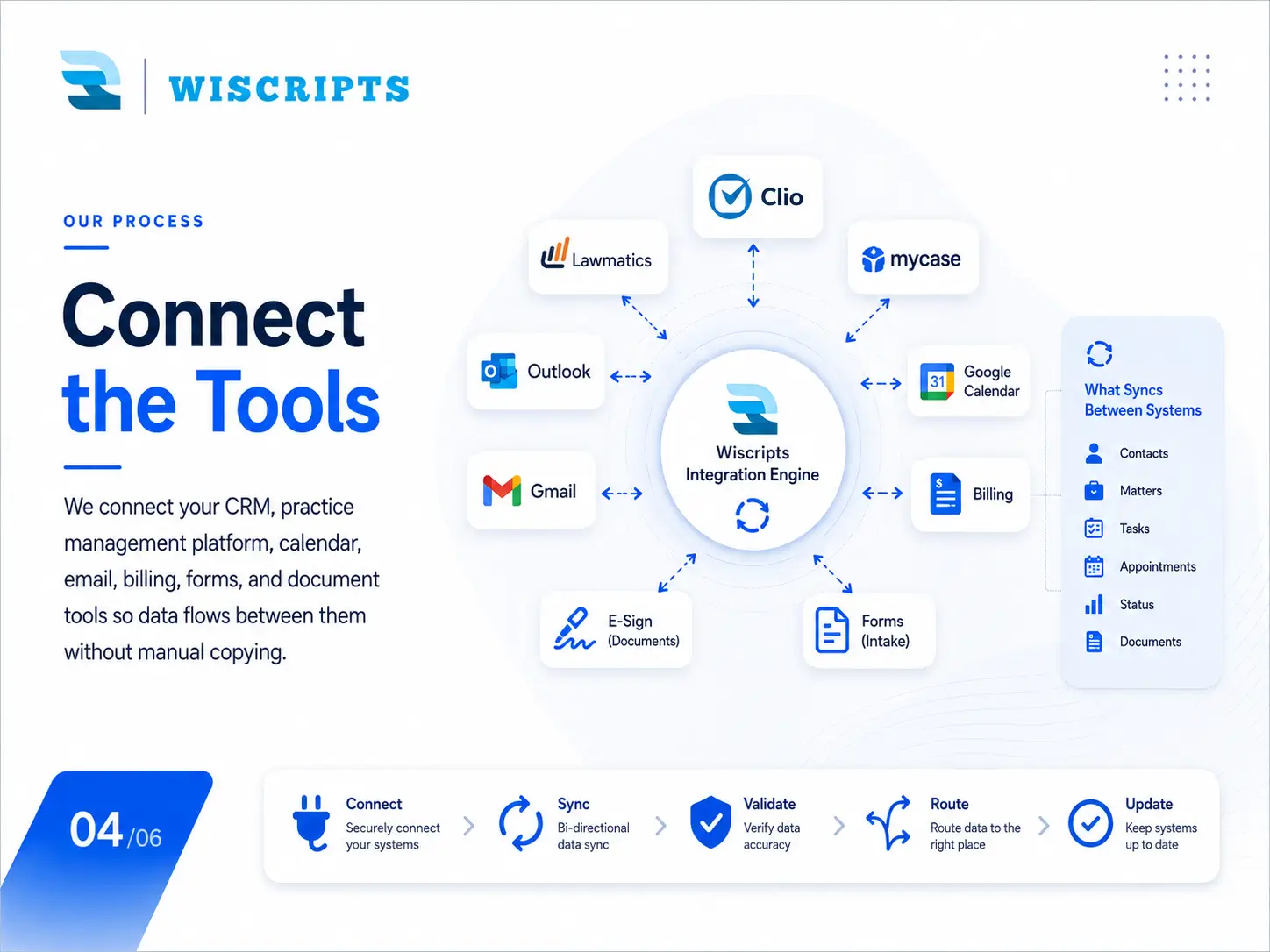
We connect the platforms small firms rely on, practice management systems like Clio, Lawmatics, MyCase, and PracticePanther, plus calendars, billing and payments, e-signature, and email. Where two tools do not integrate directly, we use automation platforms to bridge them. The goal is one connected system where information entered once shows up everywhere it belongs.
No. We work with the stack you already have. The point of workflow automation is to make your current tools work together, not to replace them. If part of your setup genuinely cannot connect, we will tell you and suggest options, but in most cases we automate around what you already use.
Common examples: new leads automatically captured and moved through intake, matters advancing through stages with tasks created at each one, deadline and court-date reminders firing on their own, client follow-up sequences, internal alerts when something needs attention, and status updates flowing between systems. We build the automations around the steps your firm repeats most.
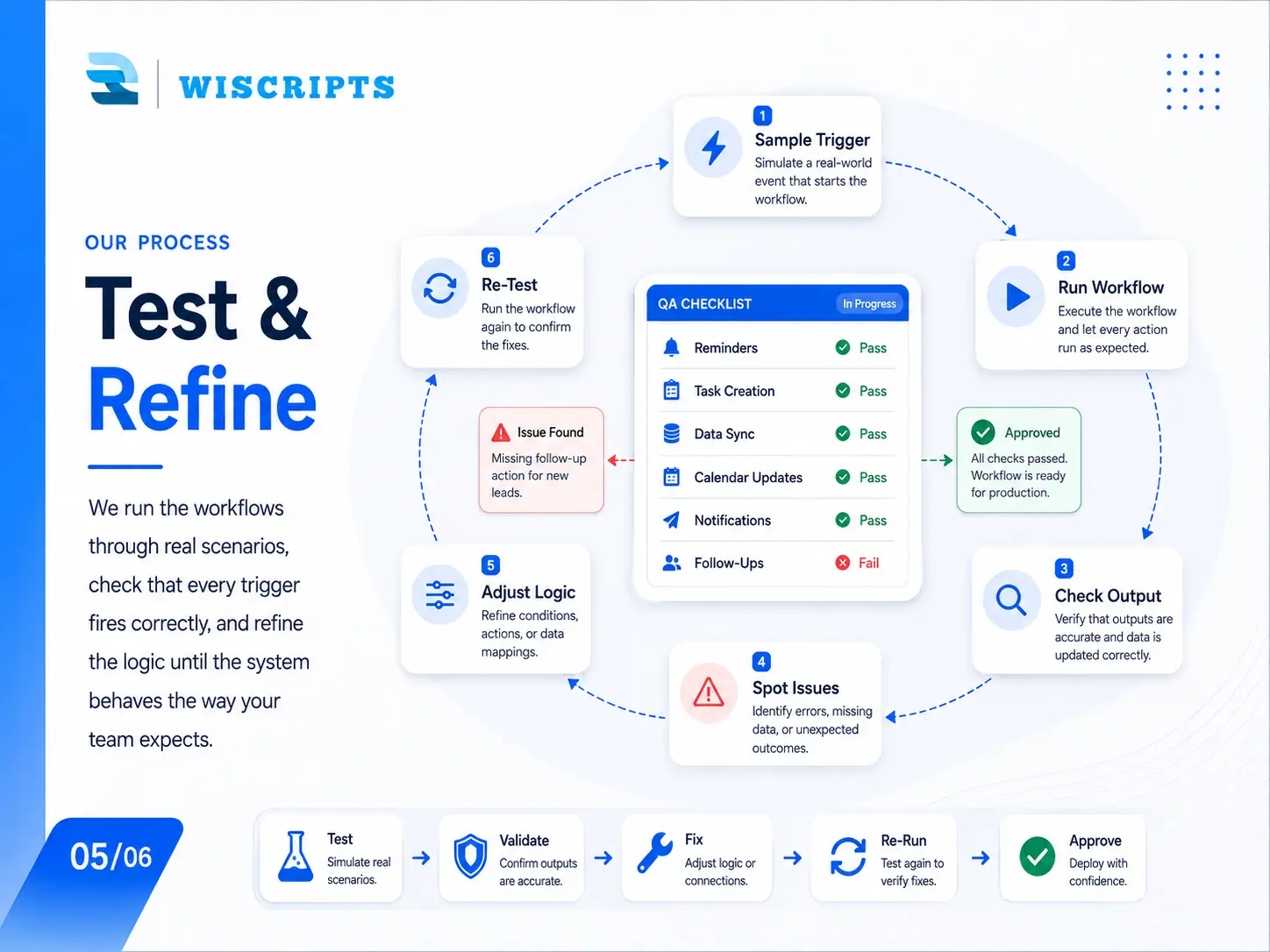
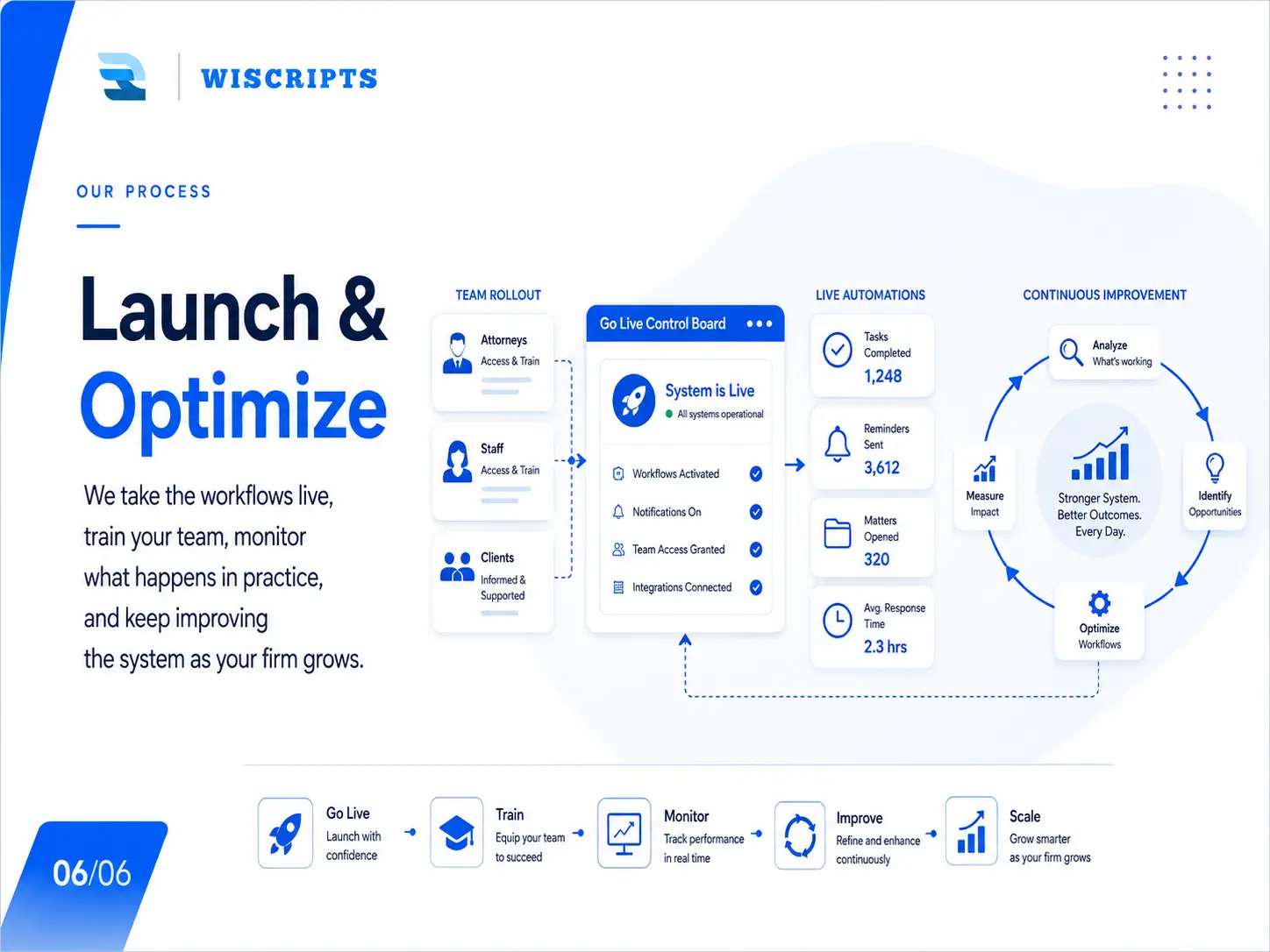
We build with checkpoints where they matter. Automation handles the routine, predictable steps, while anything that needs a person's judgment is routed for review rather than fired blindly. We also test every flow against real scenarios before launch and monitor it afterward, so the system is reliable and you stay in control of the decisions that count.
Most firms have their core automations live within two to three weeks, depending on how many tools we are connecting and how complex your process is. We start with the highest-impact automations so you feel the time savings quickly, then build out the rest.
Workflows are not set-and-forget, and that is a good thing. As your firm grows, adds staff, or changes how it works, we adjust the automations to match. Many firms keep us on a light ongoing arrangement to refine flows and add new ones as needs come up.
Yes. Once a document exists, we can route it for signature, send it to the client, and trigger the next steps automatically as part of a workflow. Building the document template itself, so it fills in from your data, is our Document Automation service. The two work together, automation produces the document, workflow sends it and moves things along.
Not at all, and solos often gain the most. Without an office manager or assistant, you are the one connecting the tools and remembering the steps. Automating that work gives a solo practice the operational backbone of a much larger firm, without the overhead. We scale the build to your size so it fits how you actually work.