





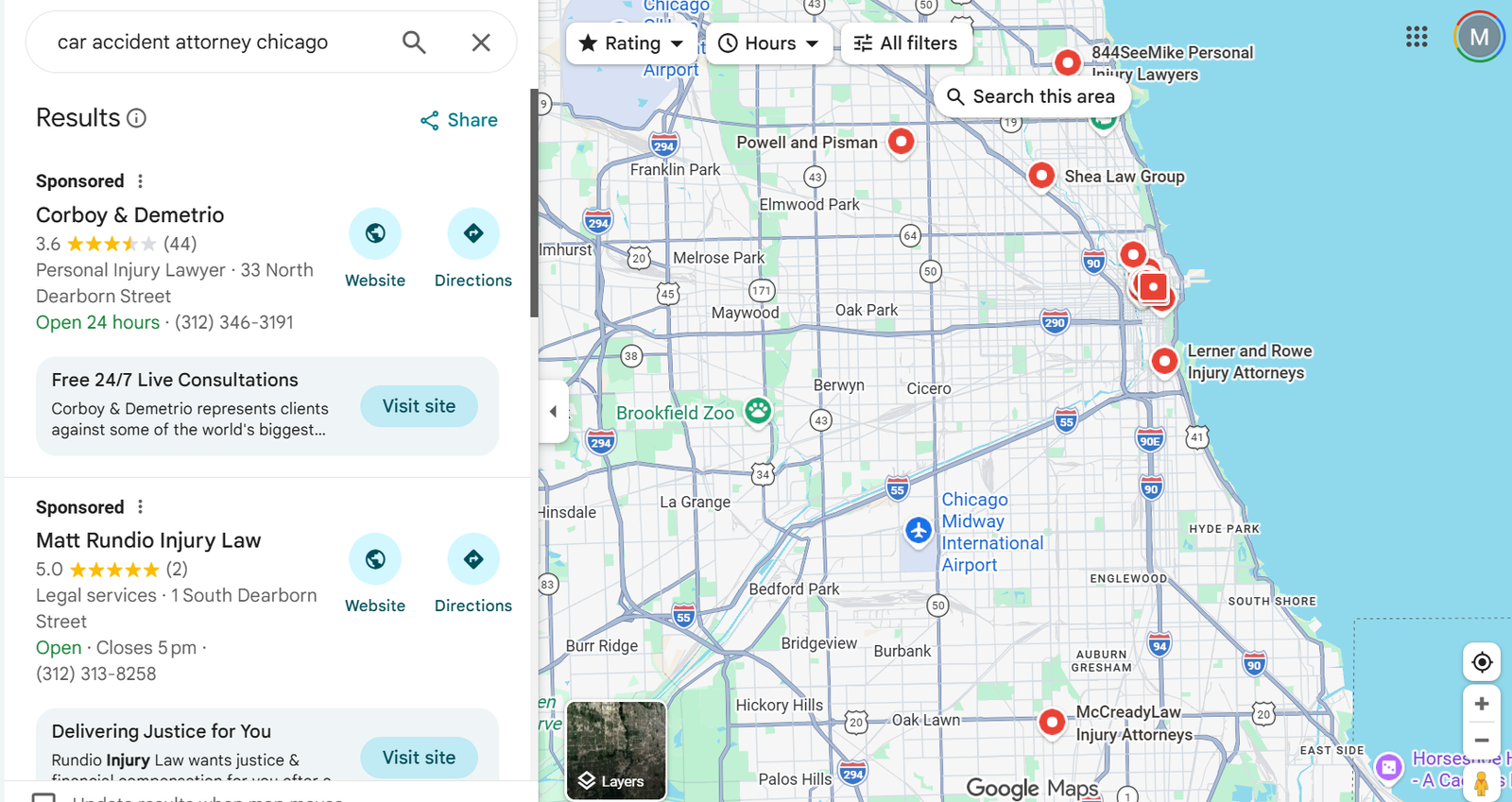
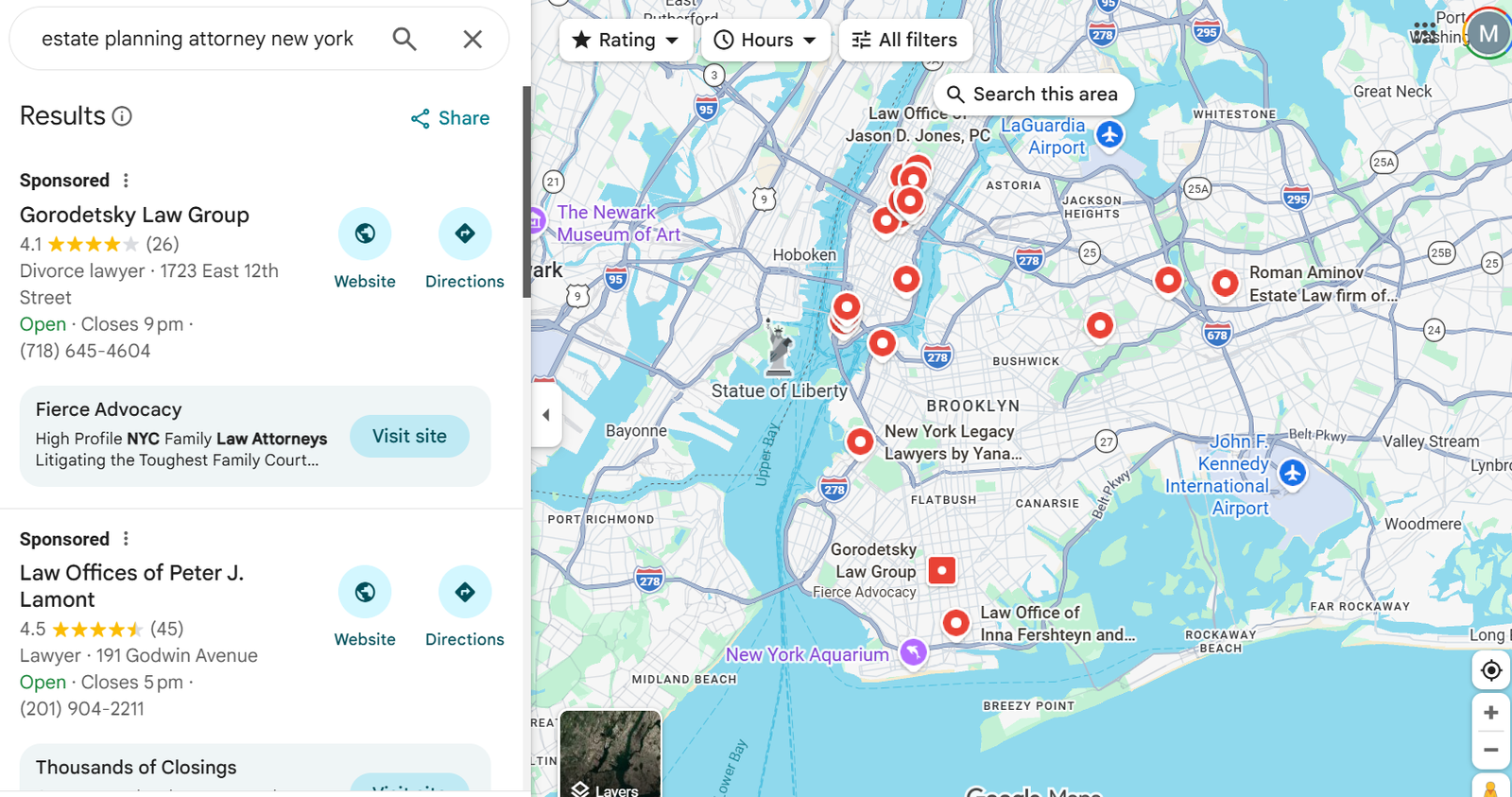
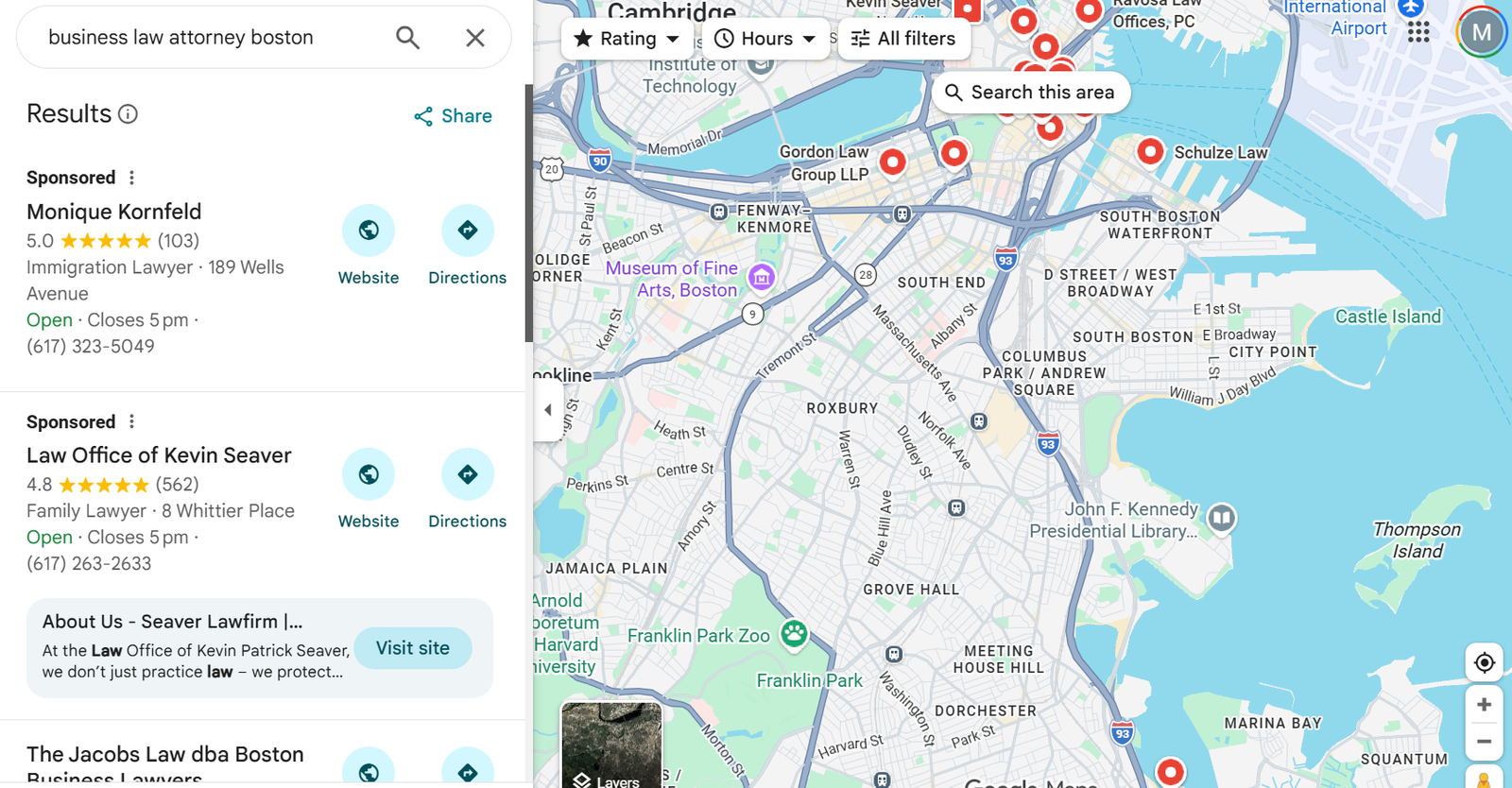














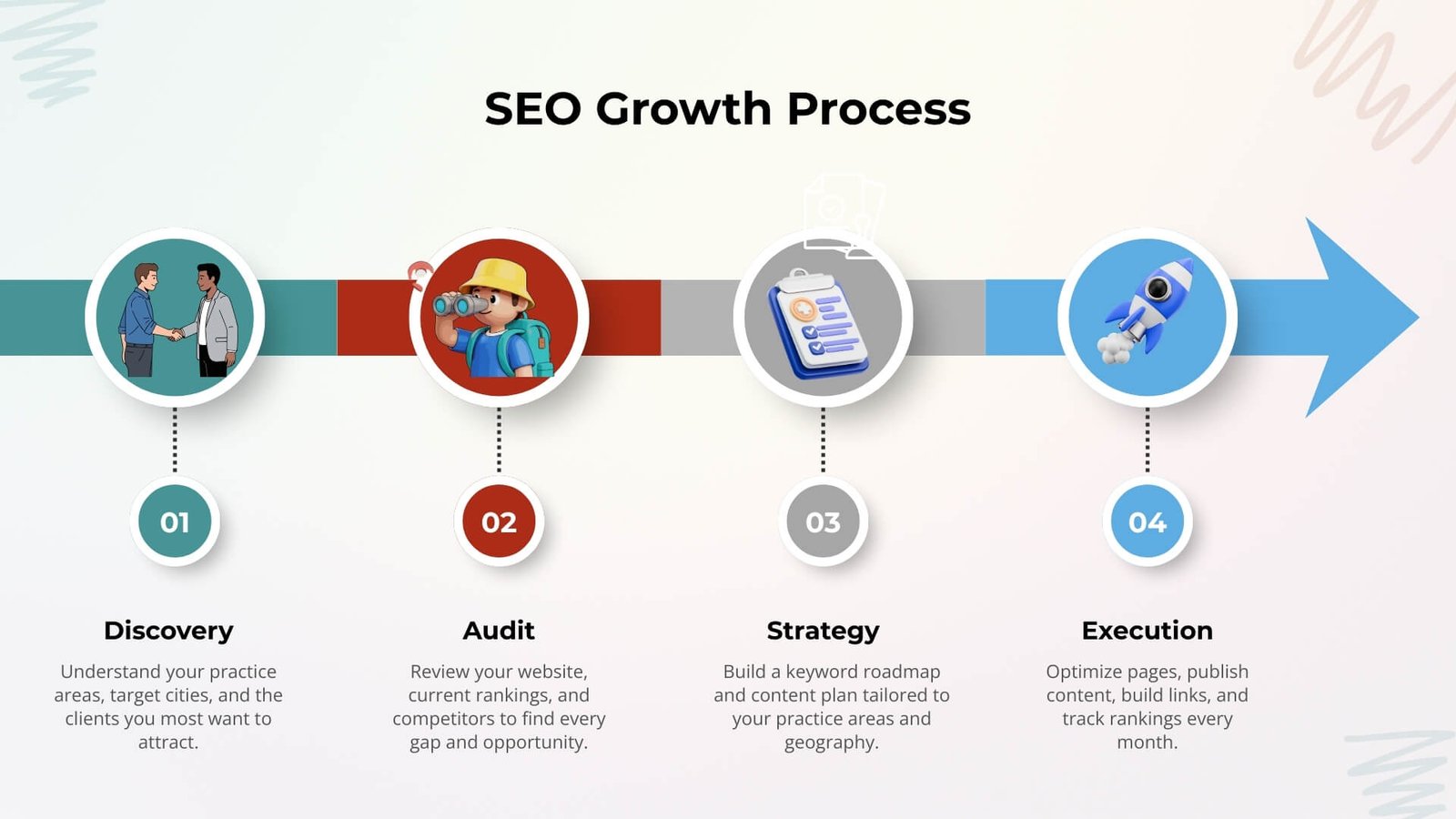
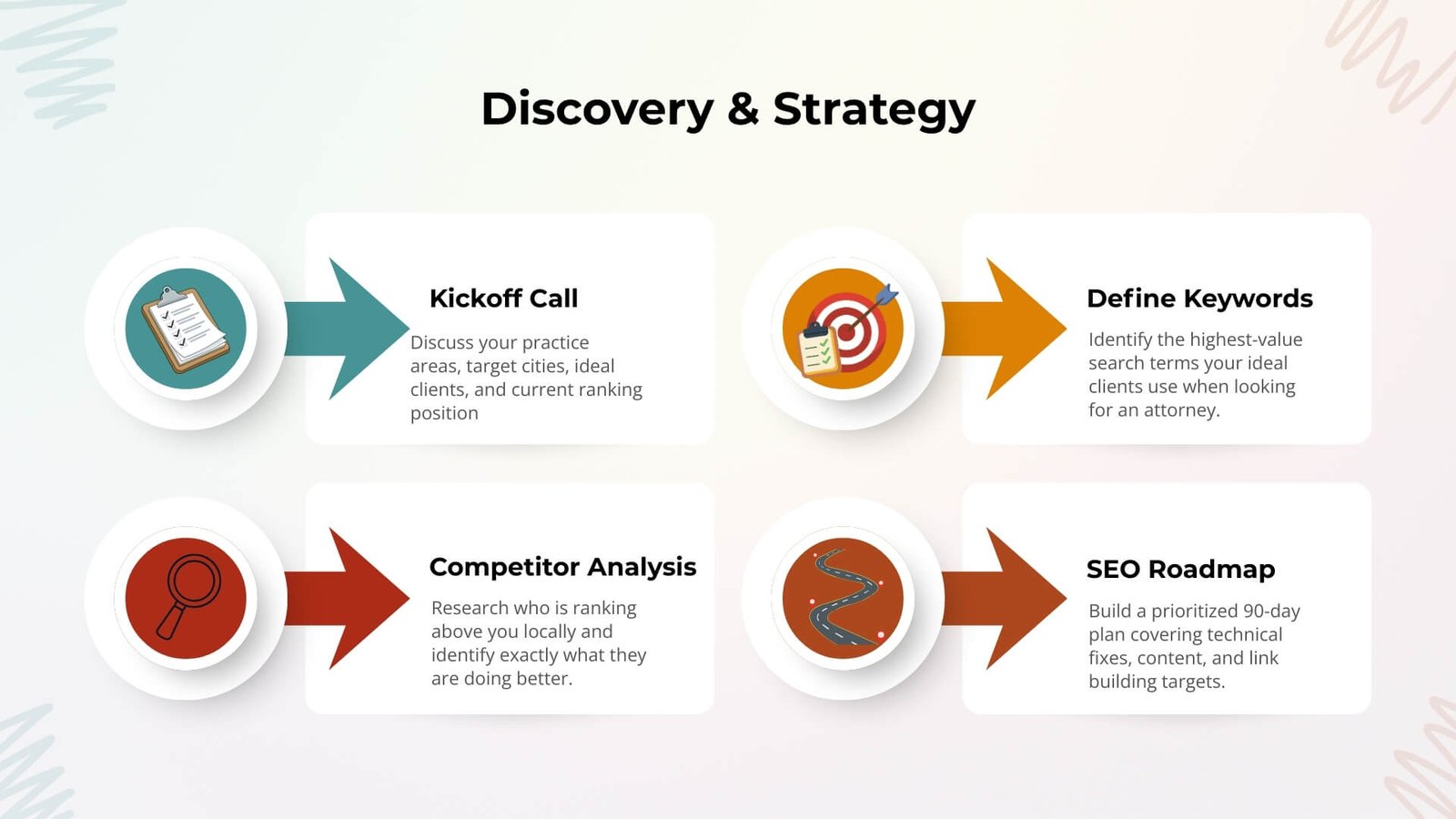





Law firm SEO requires a different approach than most industries. Search intent is highly local, competition is practice-area specific, and Google holds legal content to a higher standard under its E-E-A-T guidelines. We only work with law firms, so our keyword research, content, and link building strategies are built around how potential clients actually search for legal help in your city and practice area.
Most clients see measurable ranking improvements within the first 60-90 days, particularly for local and long-tail keywords. Competitive practice area terms in major cities typically take 4-6 months to show significant movement. The important distinction is that SEO compounds over time. Rankings you earn in month 3 continue delivering traffic in month 12 and beyond, unlike paid ads that stop the moment you stop spending.
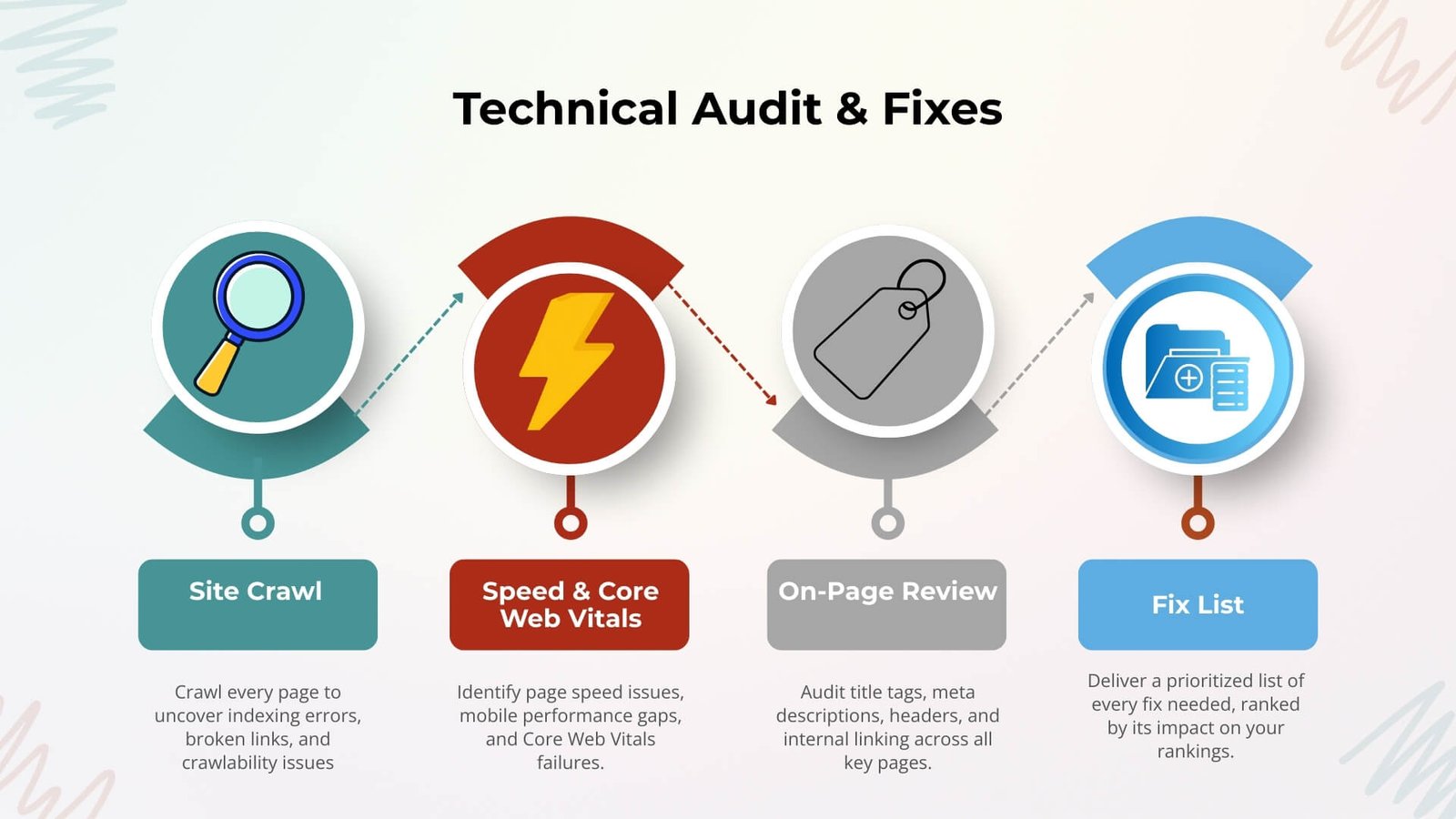
Three things drive law firm rankings: technical site health, content that matches search intent, and backlinks from credible sources. Most small firm websites have fixable technical issues suppressing their rankings, thin or generic practice area pages that do not satisfy what Google wants to show searchers, and few or no quality backlinks. We address all three systematically.
Most SEO agencies apply the same process to a law firm that they would apply to a restaurant or an e-commerce store. We have a legal background and have worked exclusively in legal marketing for six years. That means we understand the difference between practice areas, what clients in different legal situations are searching for, and what bar advertising rules apply in your state. That context produces better keyword strategy, better content, and better results.
We work with solo attorneys and small law firms across all practice areas including personal injury, estate planning, business law, family law, criminal defense, immigration, real estate, and more. Our SEO strategy adapts to your specific practice focus, geographic market, and ideal client profile. Every practice area has a distinct set of search terms and local competitors, and we build your strategy around that reality.
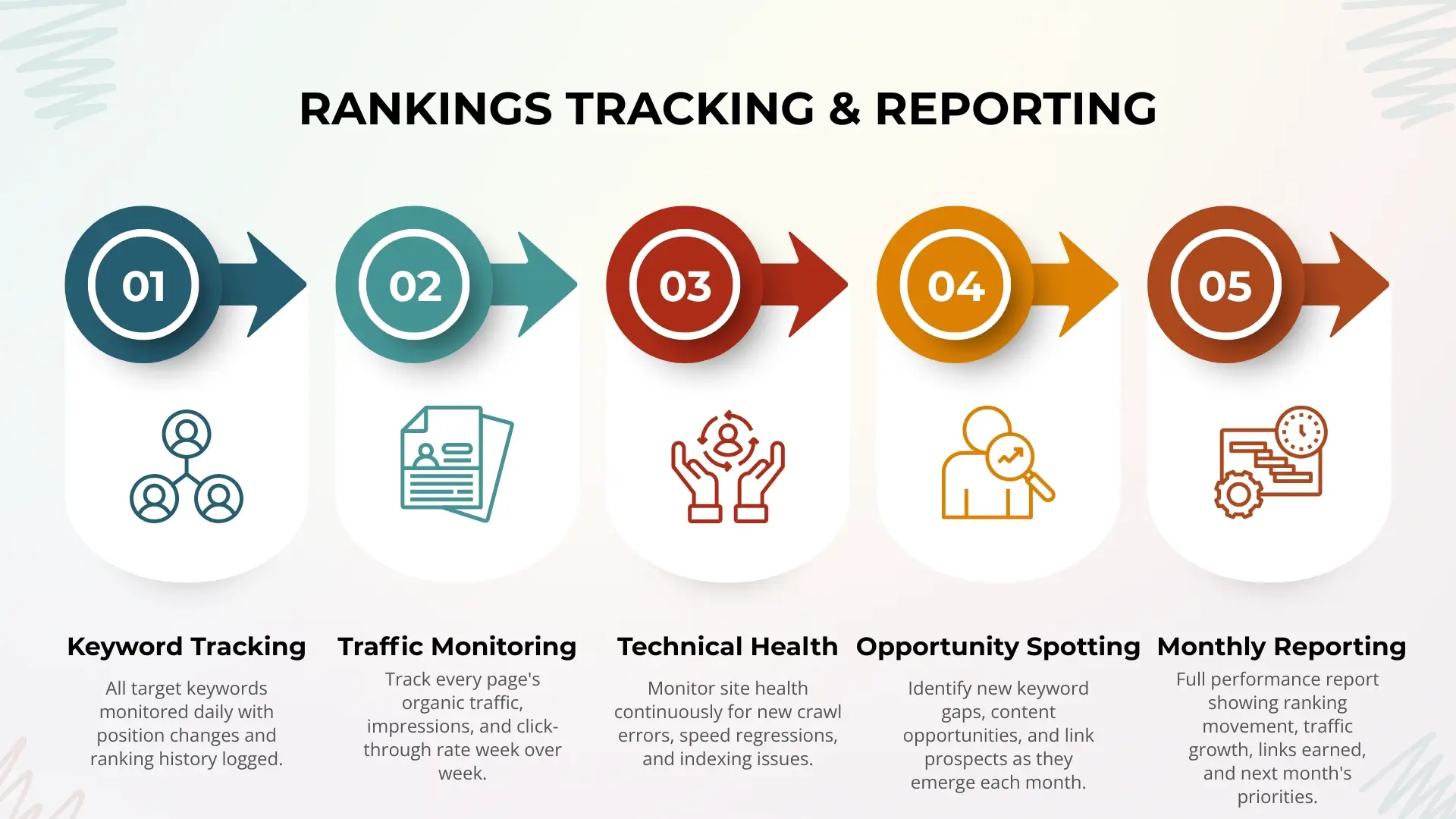
In the first 90 days, most clients see ranking improvements across 15-30 keywords, with several breaking into the top 10 results. By month 6, clients typically rank on page one for their core practice area and city combinations and are gaining visibility for longer-tail terms that drive highly qualified traffic. We track every keyword and report on movement monthly so you always know exactly where you stand.
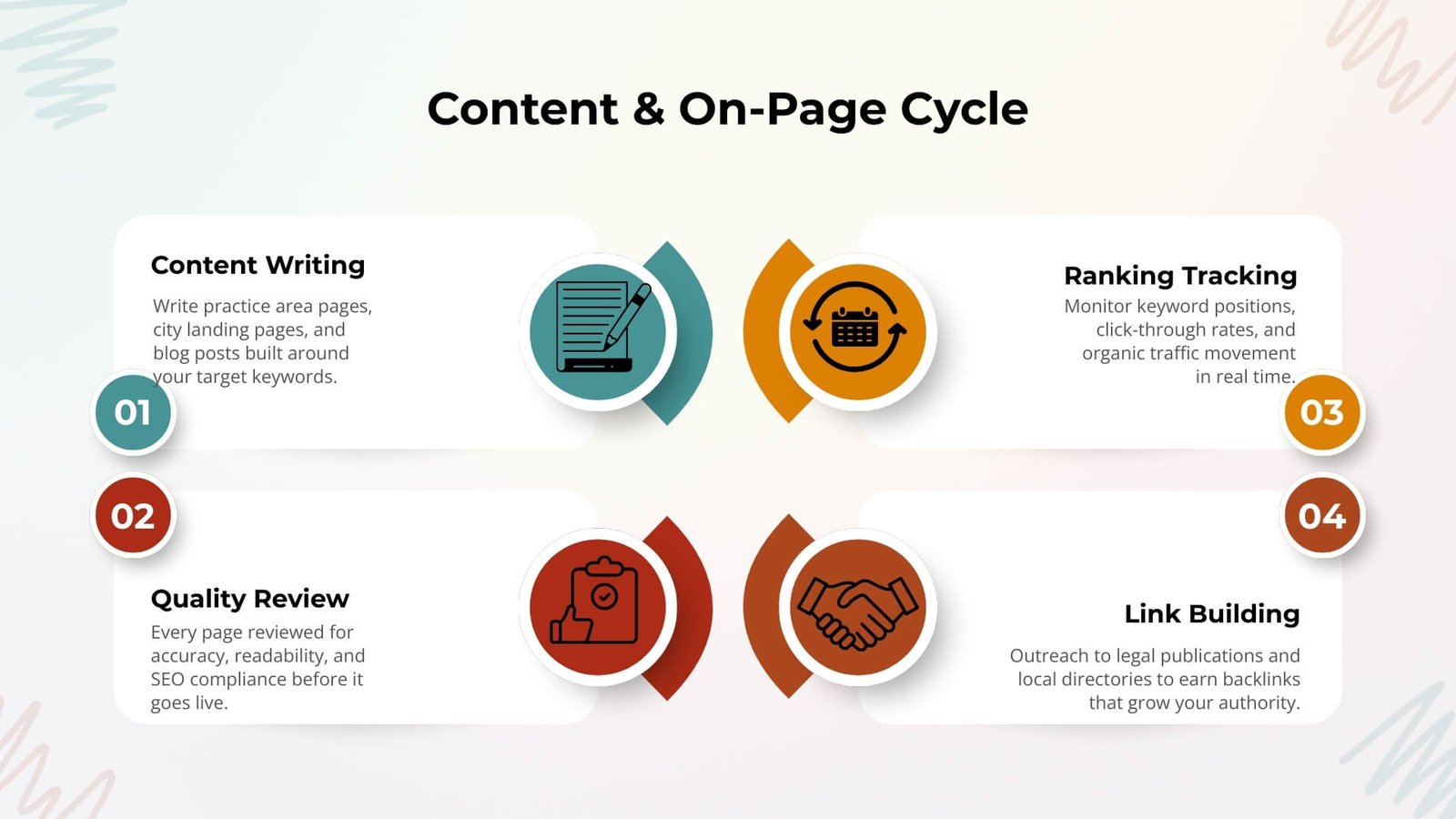
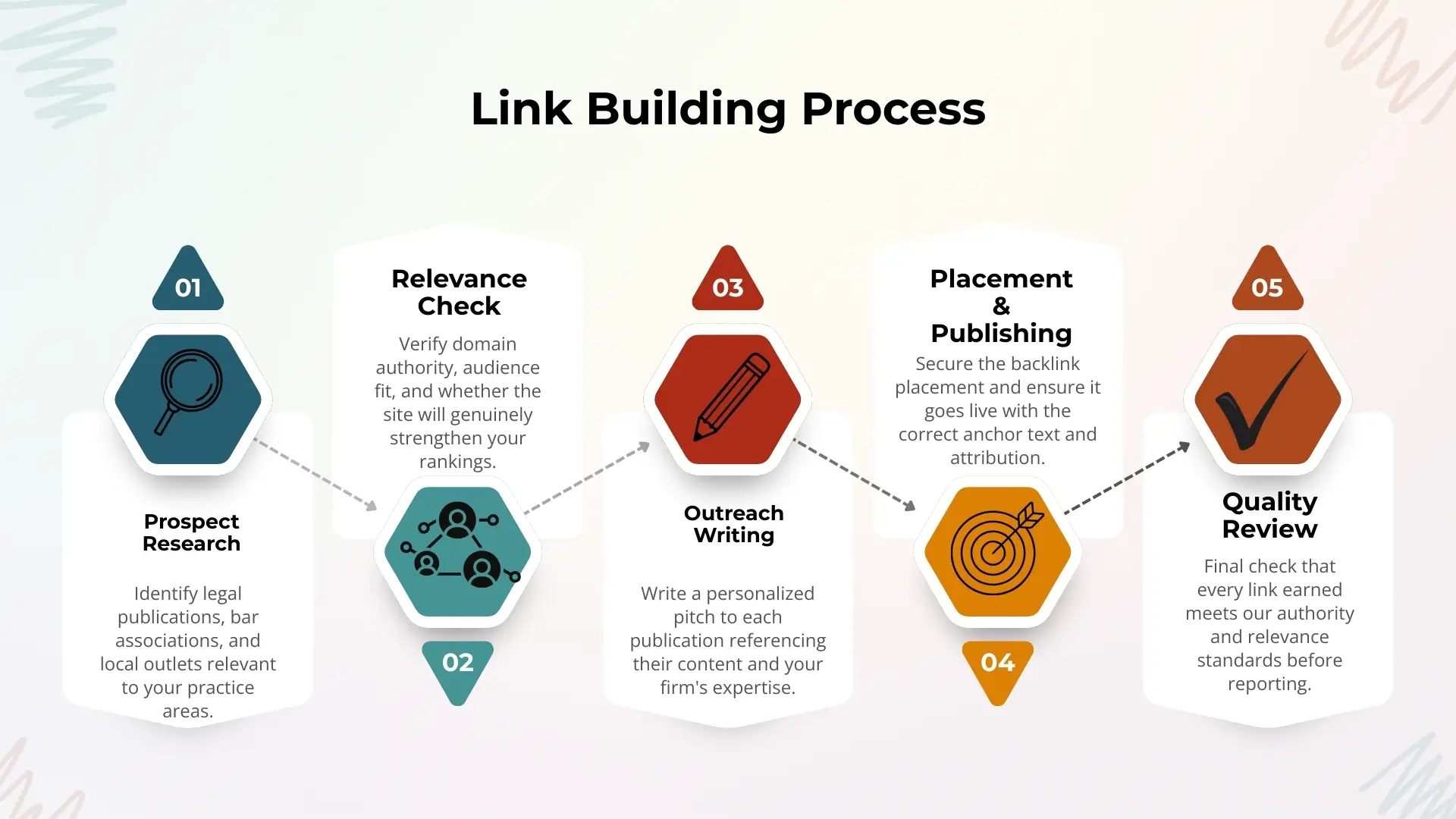
Our service includes: (1) Kickoff call to understand your practice areas, target cities, and goals, (2) Full technical SEO audit and implementation of all fixes, (3) Keyword research and 90-day content roadmap, (4) Practice area page and city landing page optimization, (5) Monthly blog content production, (6) Manual link building outreach to legal publications and local outlets, (7) Google Business Profile optimization and local citation management, (8) AI SEO optimization for Google AI Overviews and generative search tools, and (9) Monthly reporting on rankings, traffic, and leads.
Absolutely. Every piece of content we write goes to you for review and approval before it is published. Many clients trust us to handle content entirely after the first few pieces establish tone and style, but we are happy to keep you in the review loop throughout. We can also accommodate specific messaging preferences, case types you want to highlight, or geographic areas you want to prioritize.
Higher rankings bring more visitors to your site, but converting those visitors into clients depends on your website doing its job. As part of our ongoing work we review how your key pages are performing and flag conversion issues we spot, such as weak calls to action, missing contact forms, or pages that rank well but do not generate inquiries. The goal is not just traffic but the right traffic turning into consultations.
We are familiar with state bar advertising guidelines across US jurisdictions and factor them into everything we produce. This includes avoiding unsubstantiated superlatives, ensuring required disclaimers are in place, and flagging anything that could create compliance issues in your state. If your state has specific rules we are not already familiar with, we review them during onboarding before any content goes live.