


















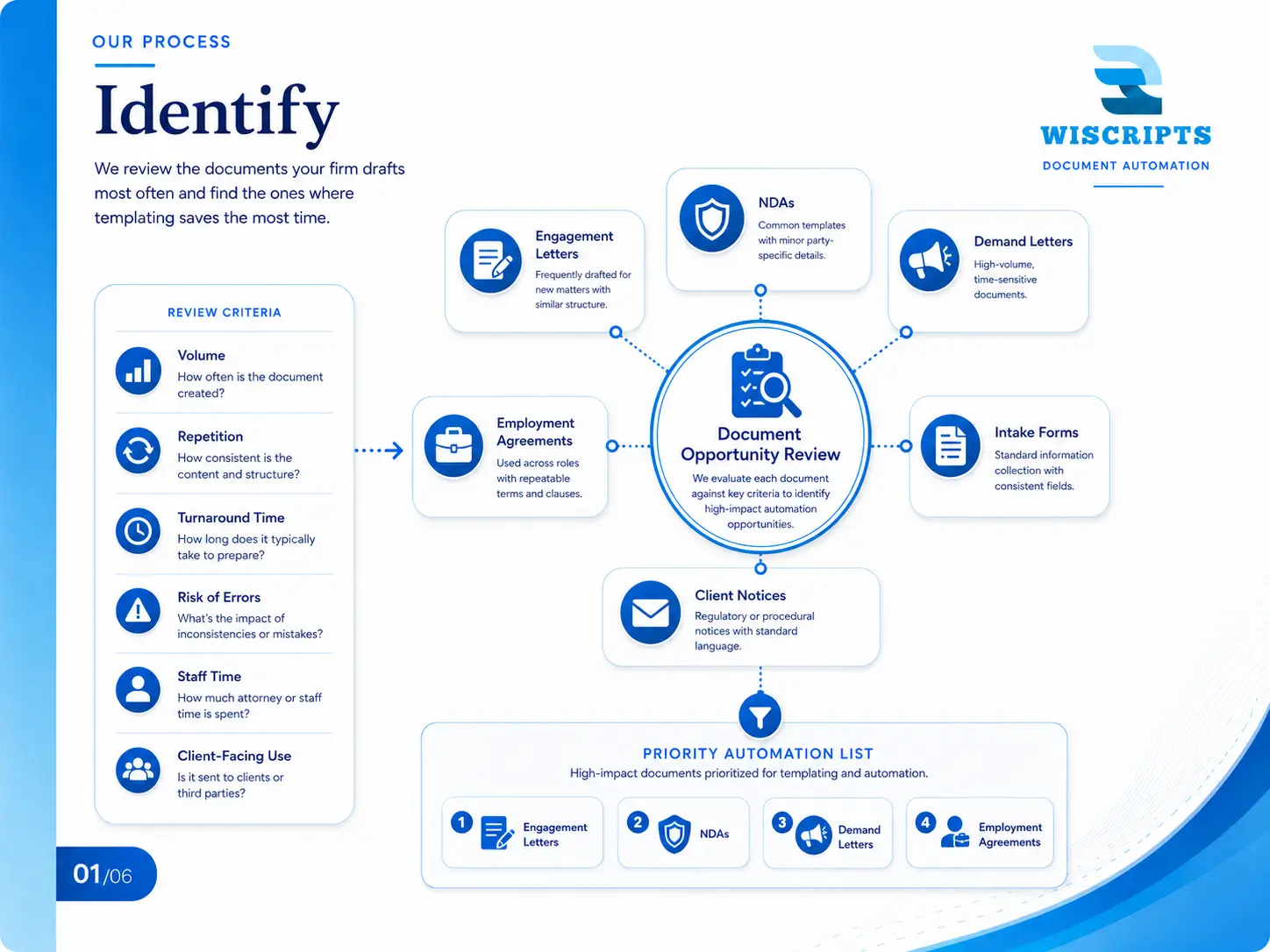
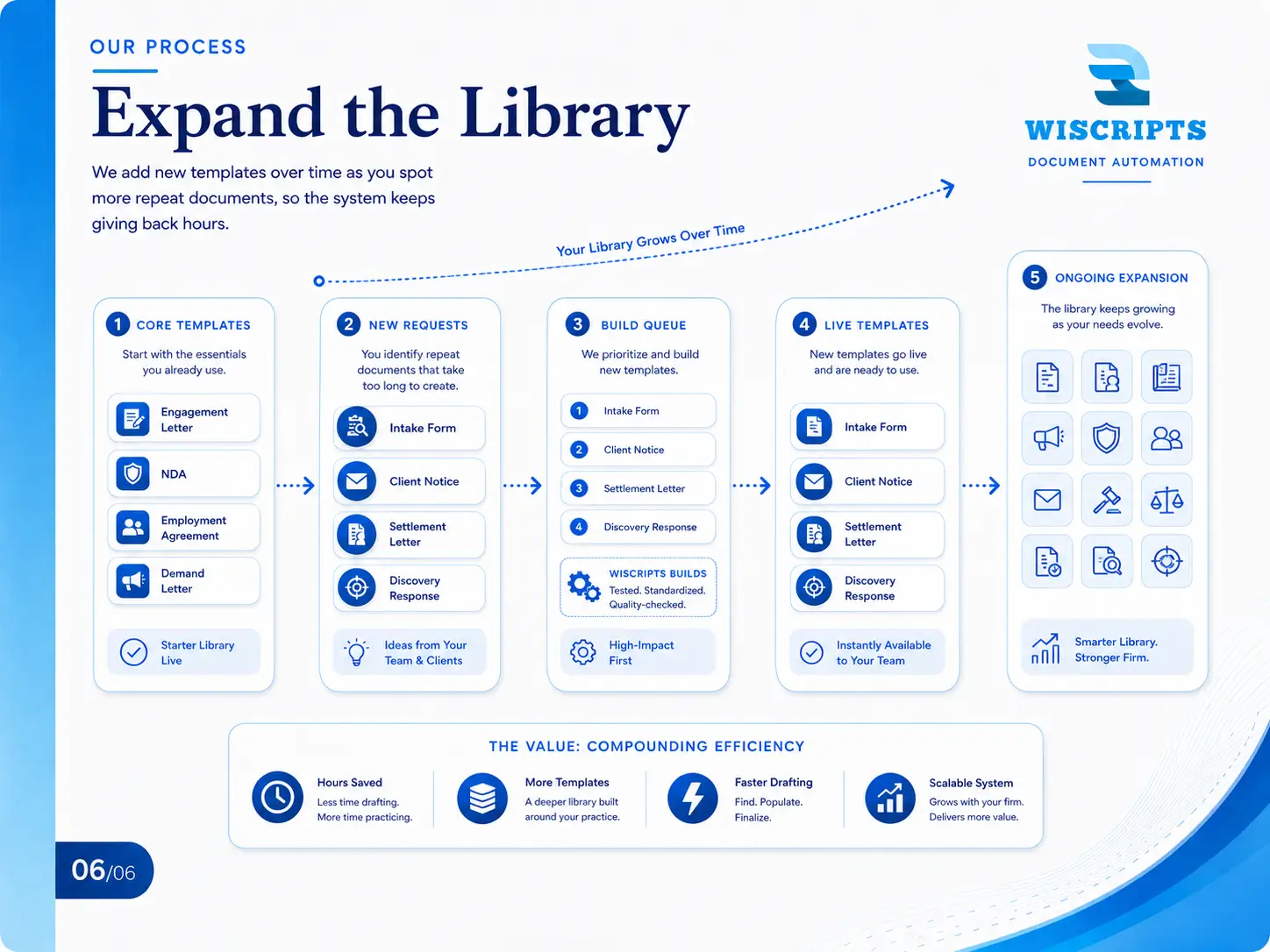





Any document your firm produces repeatedly is a good candidate, engagement letters, fee and retainer agreements, intake packets, standard contracts, wills and trusts, deeds, formation documents, and common filings. We start with the ones you draft most often, since that is where automation gives back the most time, then expand from there.
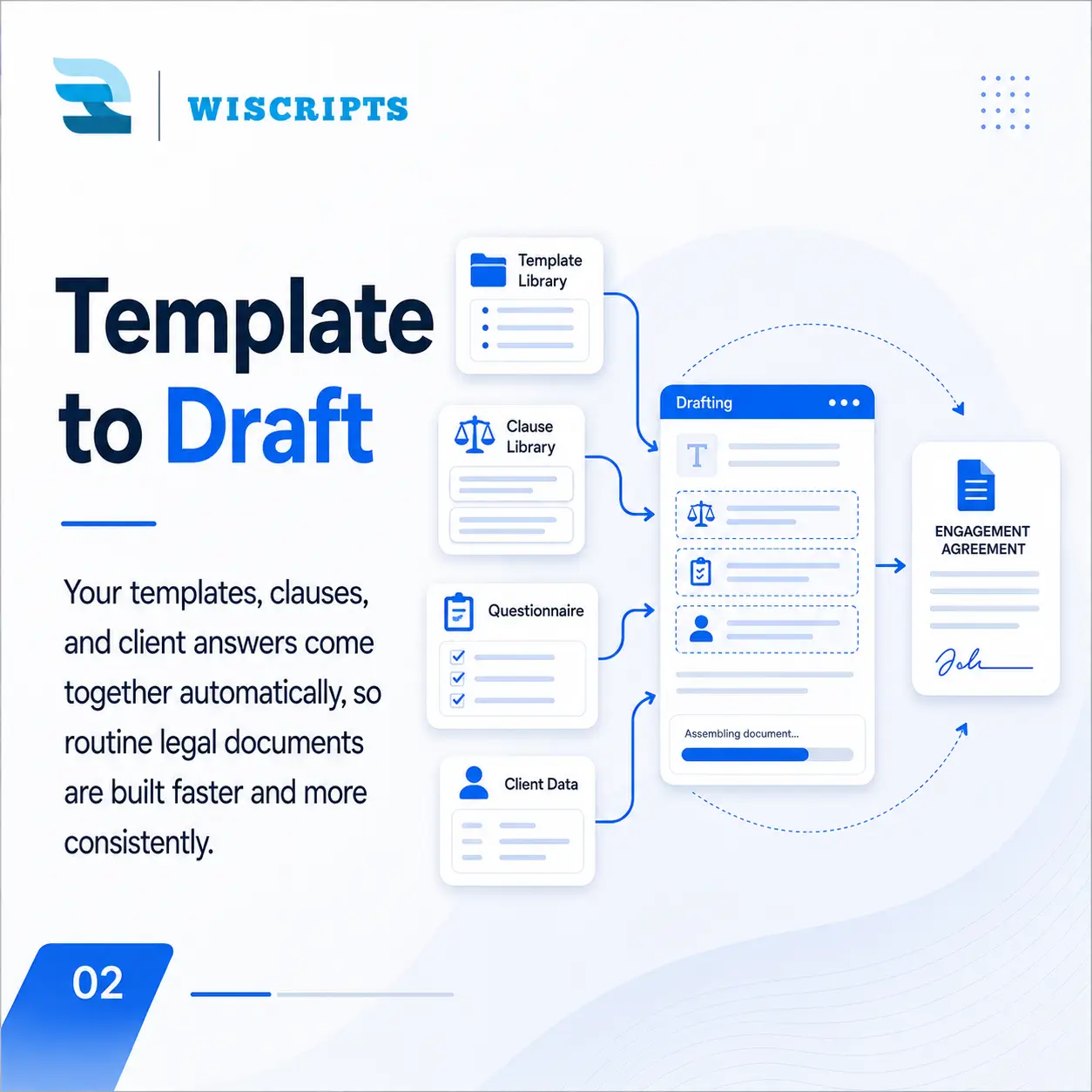
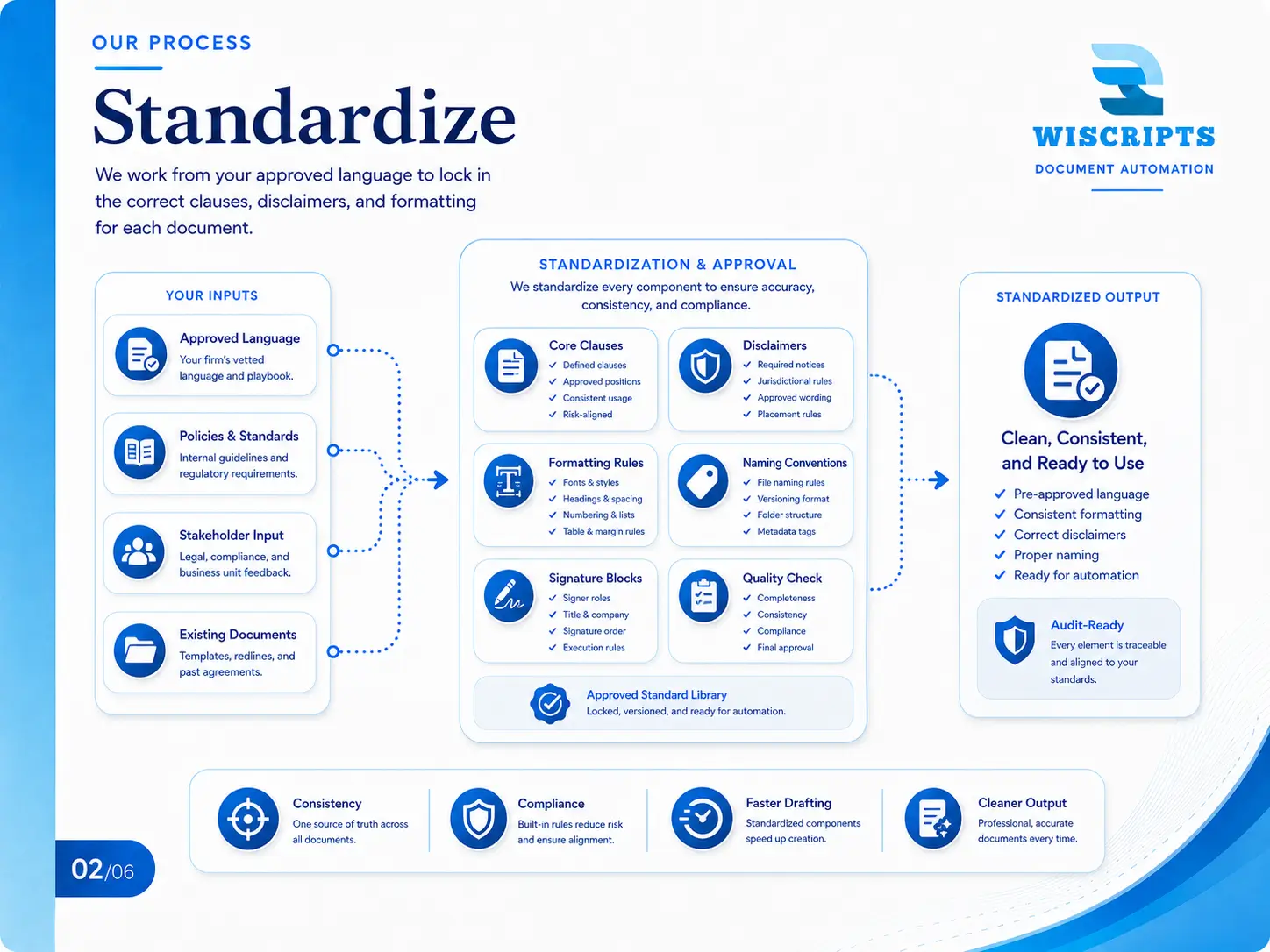
Yes. We build every template from your approved documents, so the clauses, disclaimers, and formatting are yours, not a generic version. The point is to produce a document that is ready to send in your firm's voice, not a shell you have to rewrite. You review and sign off on every template before it goes into use.
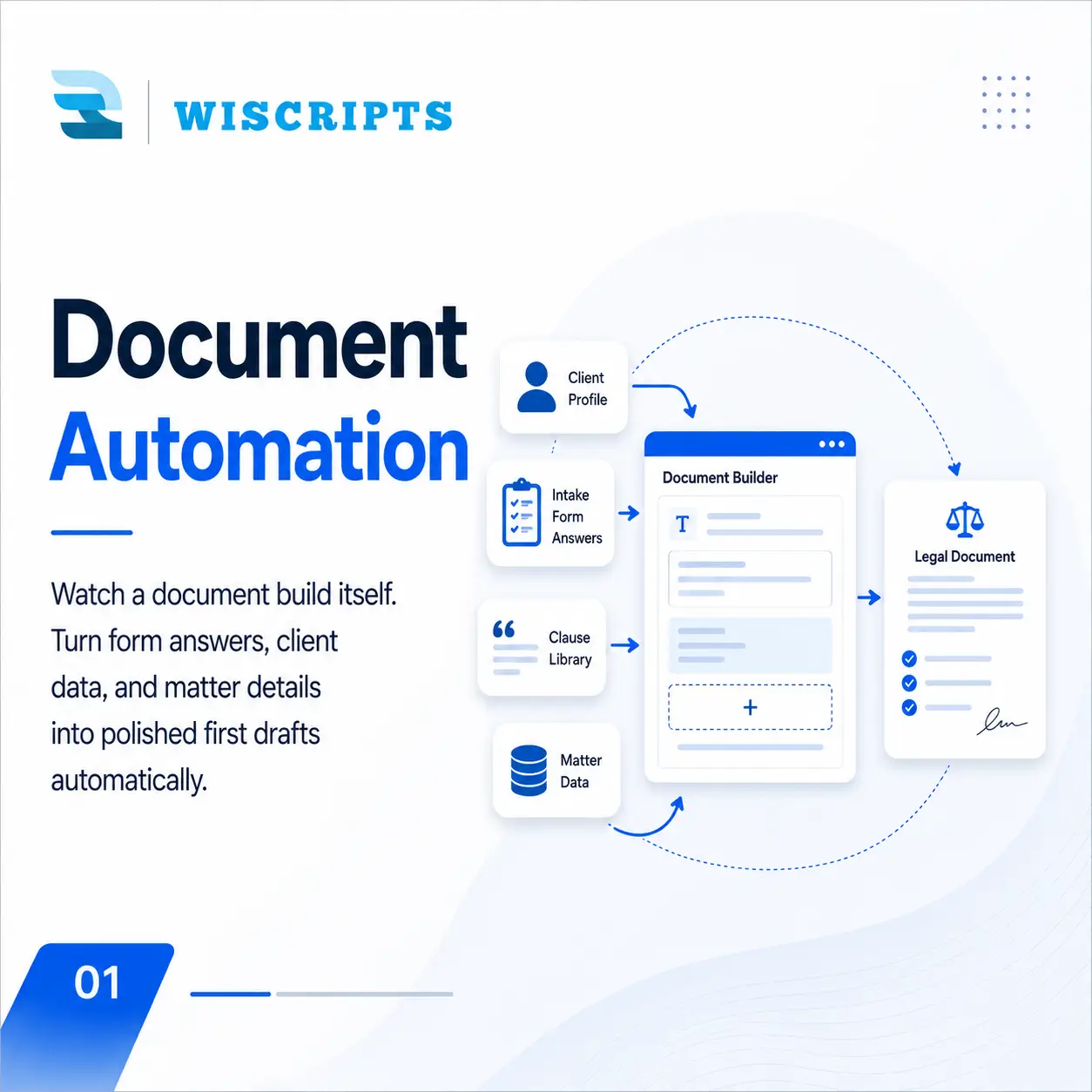
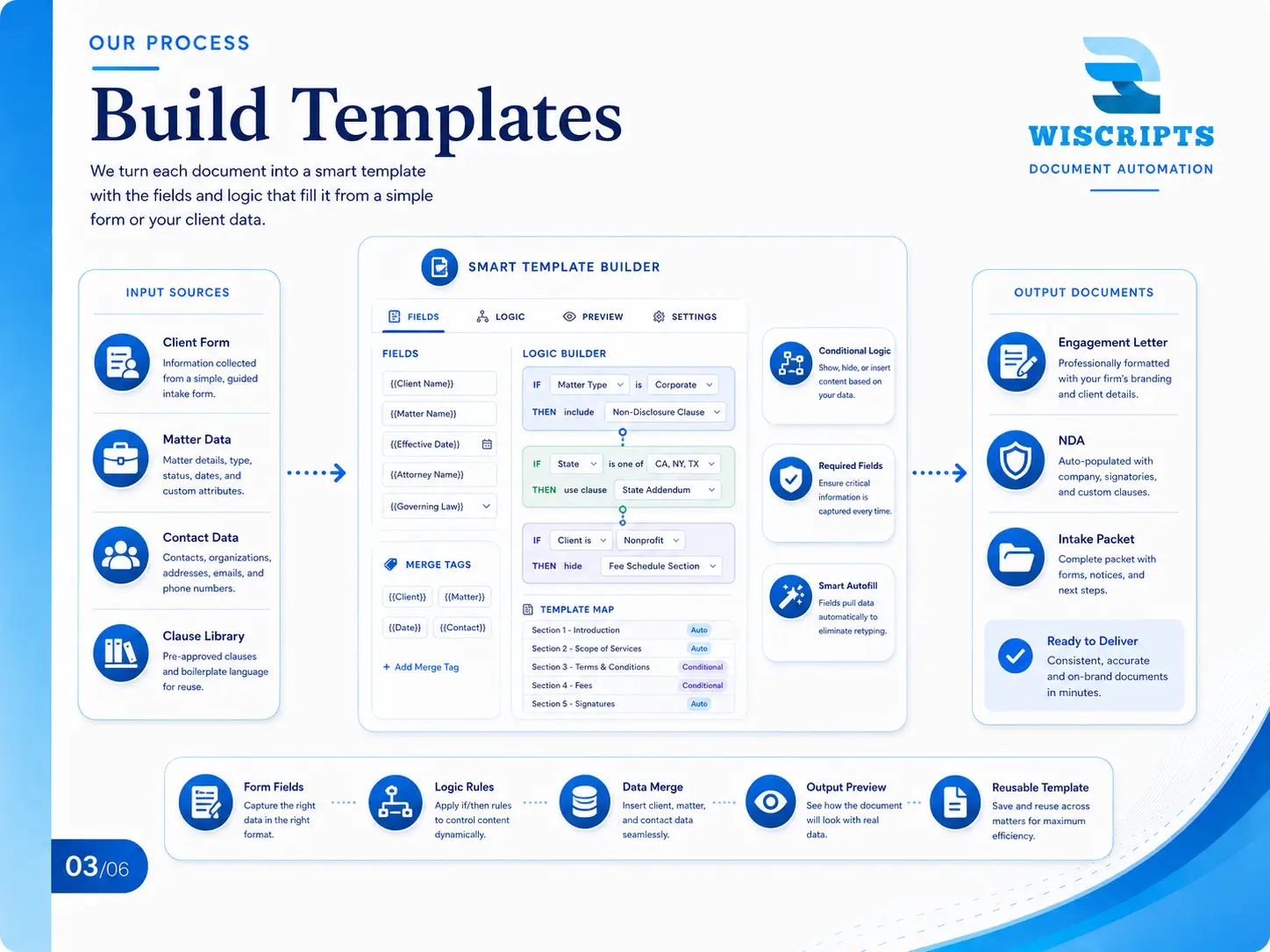
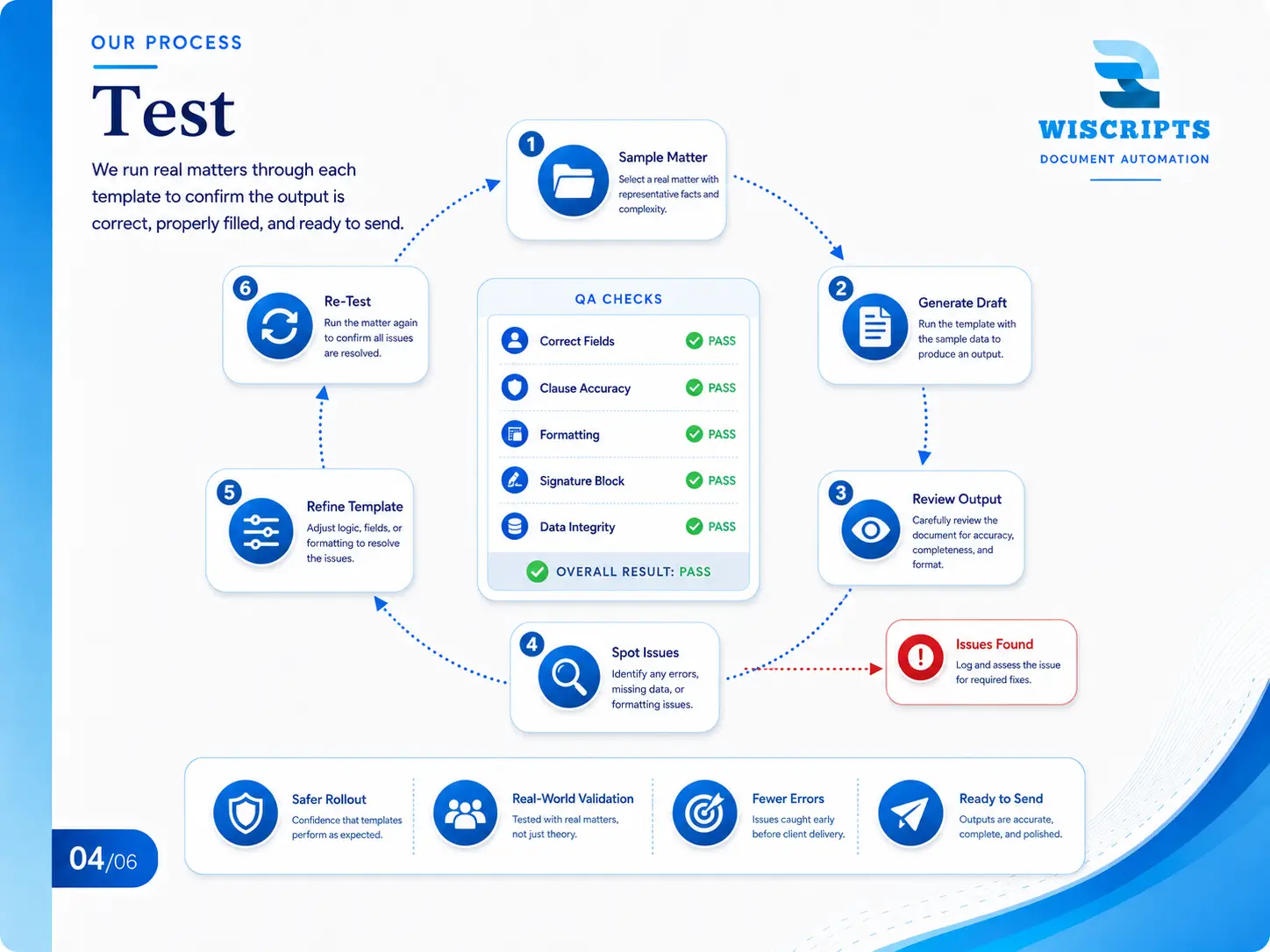
A basic Word template still makes you hunt through the document filling in blanks by hand, which is slow and error-prone. Document automation fills the document for you from a simple form or your existing client data, drops every detail in the right place, and locks in your approved language so nothing is missed or mistyped. It is the difference between a starting point and a finished draft.
For routine documents, automation typically cuts drafting time by around eighty percent or more, a thirty-minute draft becomes a few minutes of review. The savings compound as your template library grows and as the same documents get reused across matters. For a busy firm, that is hours of billable time recovered every week.
In most cases, yes. Templates can pull directly from the client and matter data you already keep in systems like Clio, Lawmatics, or MyCase, or from a simple intake form, so you are not re-entering information that already exists. We set the connection up as part of the build.
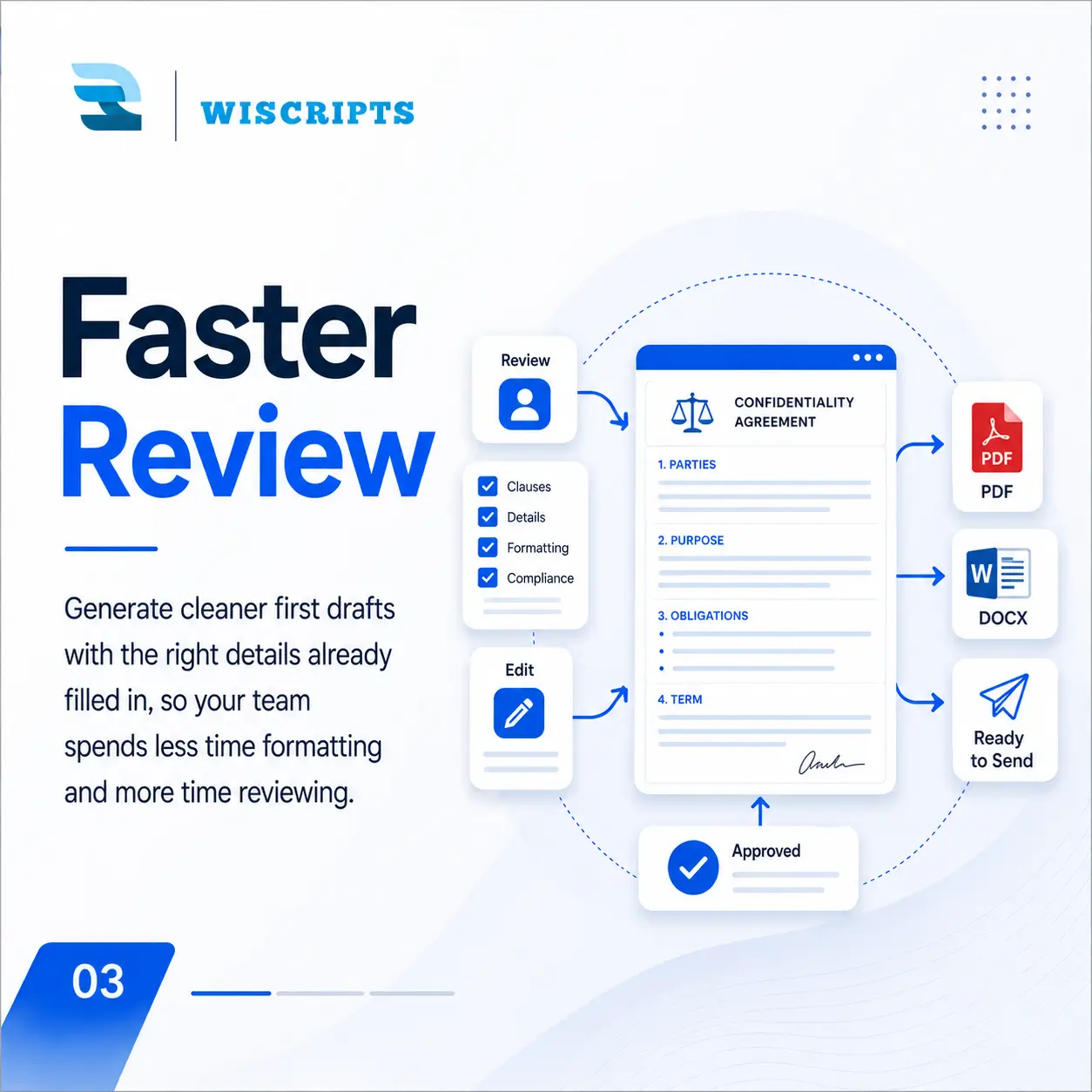
Always. Document automation produces the draft, you stay in control of what gets sent. Every generated document is yours to review, adjust, and approve before it goes to a client. The system removes the busywork, not your judgment.
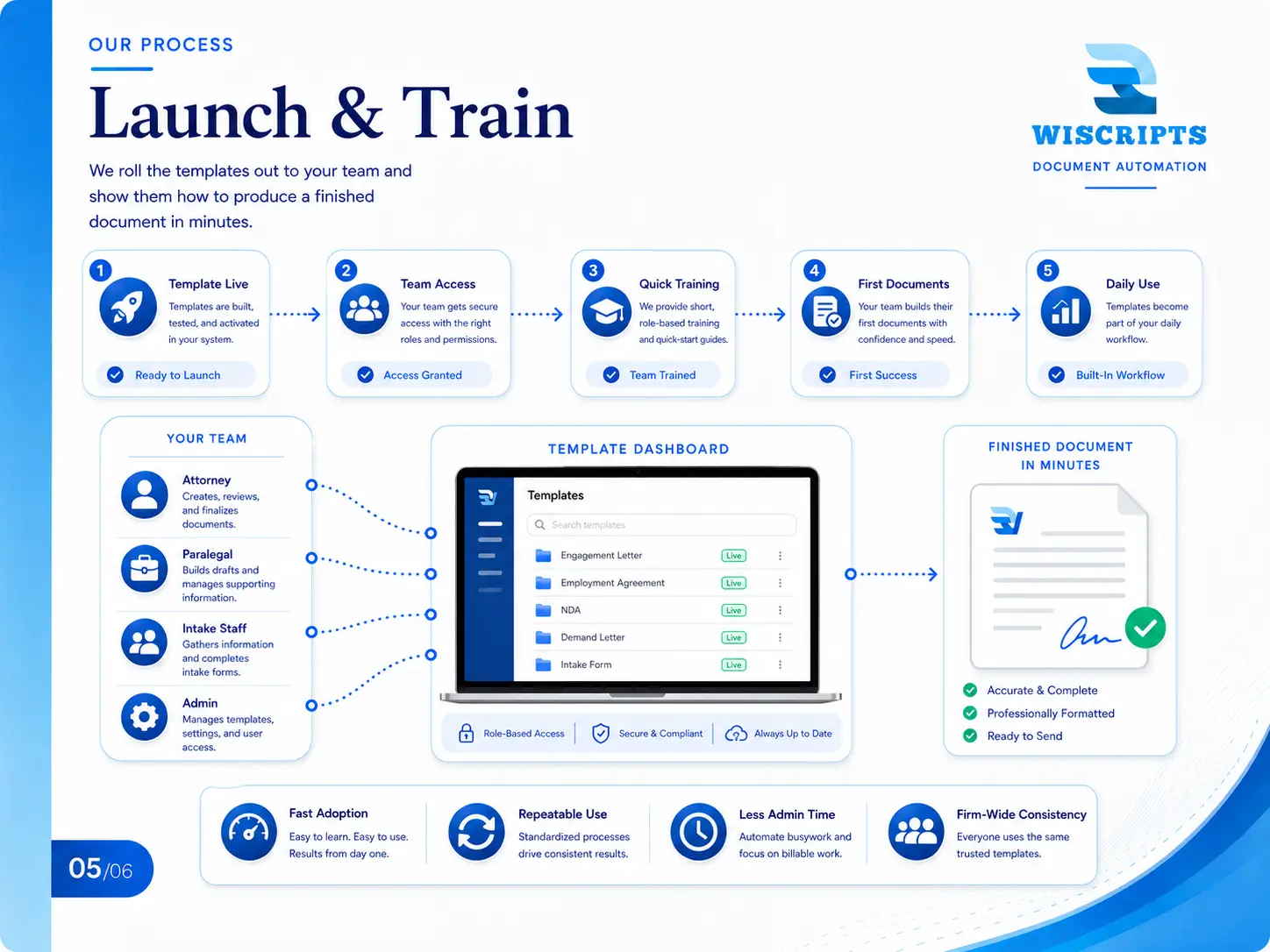
Most firms have their first templates live within one to two weeks, depending on how many documents we are building and how complex they are. We prioritize your highest-volume documents first so you start saving time quickly, then build out the rest of the library over time.
That is exactly where automation earns its keep. We build logic into the templates so the right clauses and sections appear based on the matter, the client, or the options you select, no more keeping five versions of the same agreement and hoping you grabbed the right one. The more variation a document has, the more a smart template helps.
Producing the document and sending it as part of an automated process are two different things. This service focuses on building templates that generate finished documents fast. If you also want documents triggered, routed for signature, and sent automatically as part of a workflow, that is our Workflow Automation service, and the two work well together.
Yes, because you stay in control. The templates use your approved language and you review every document before it goes out, so automation improves consistency rather than introducing risk. Because we have a legal background and work only with law firms, we build templates that respect the precision legal documents require.