




















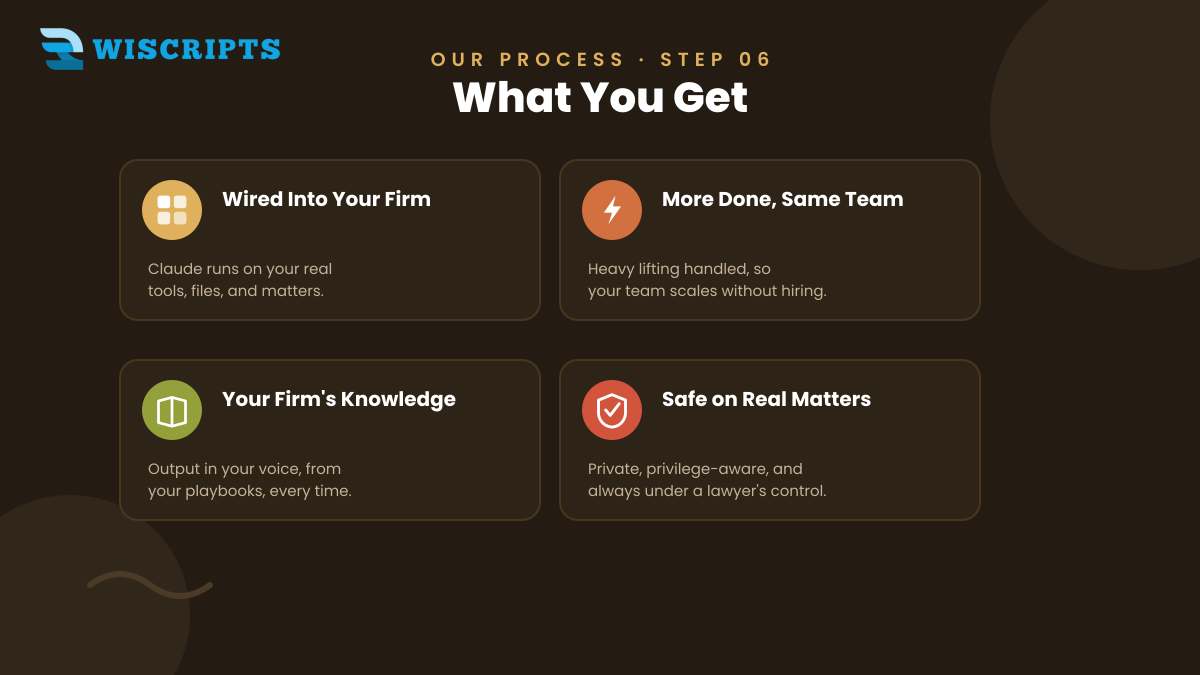



You can, and you should for quick questions. But there's a difference between typing into a chat box and having Claude wired into how your firm actually runs. On your own, you're copy-pasting between Claude and your real tools, starting every task from a blank prompt, and working with nothing connected to your matters or client data. What we build is the layer above that: Claude connected to your systems, turned into repeatable workflows, and run with guardrails around confidentiality. That's the part a lawyer can't set up alone, and it's the whole reason this page exists.
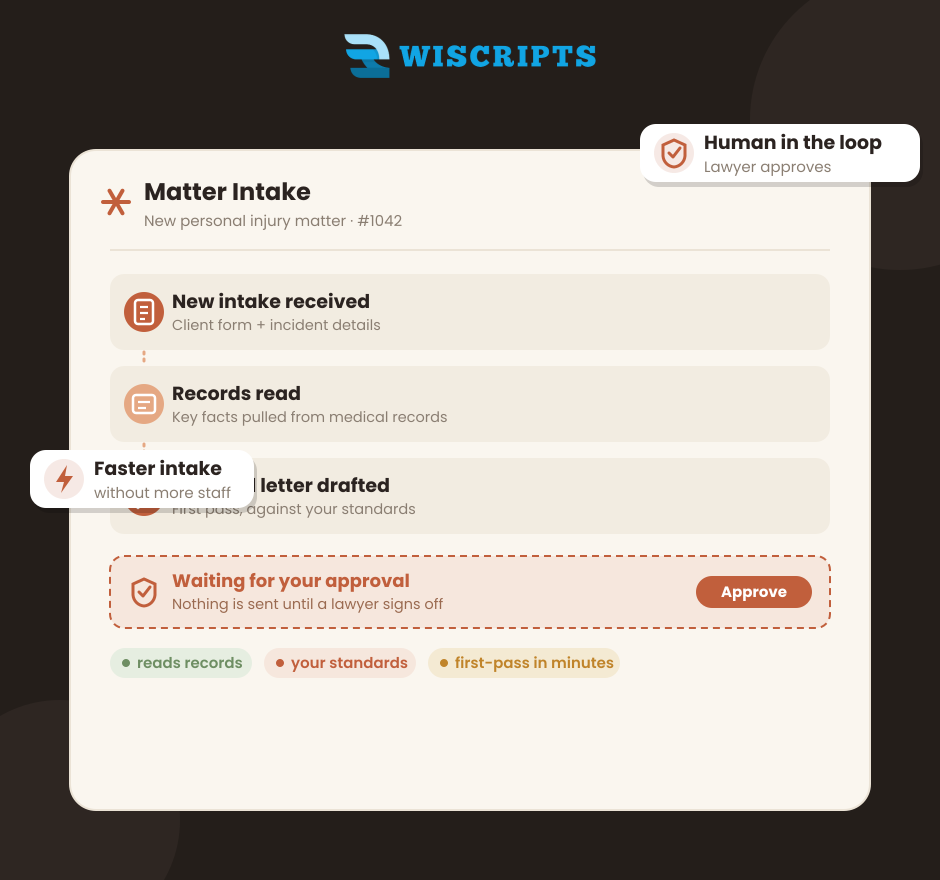
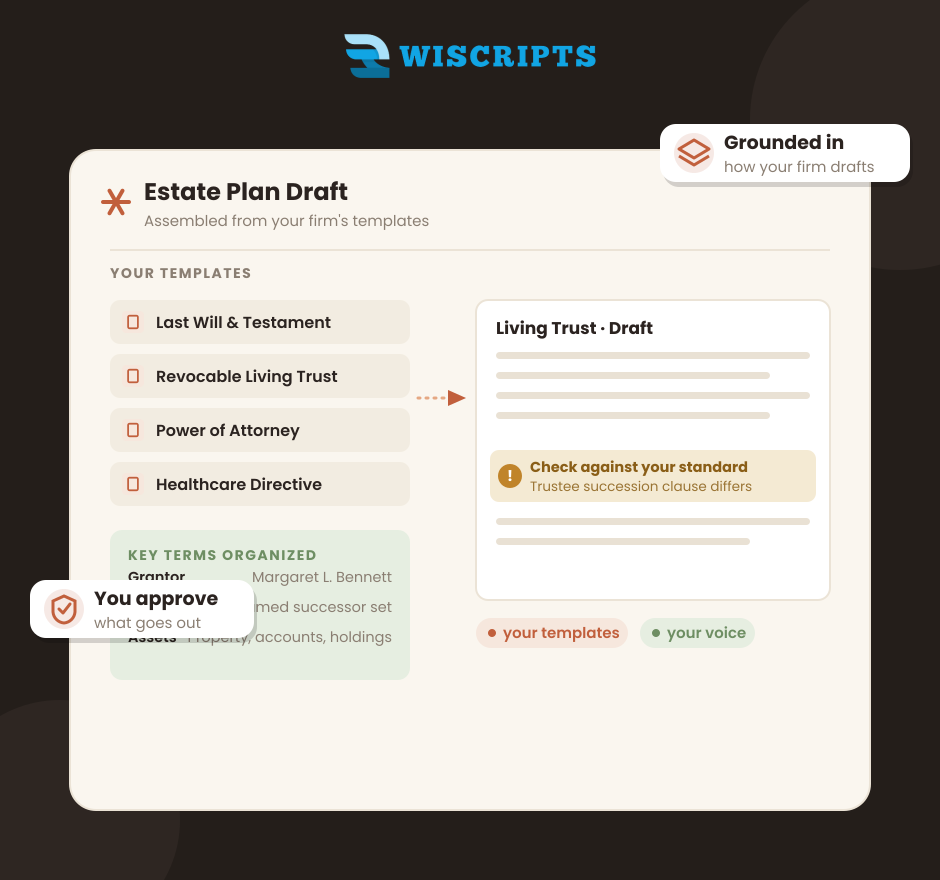
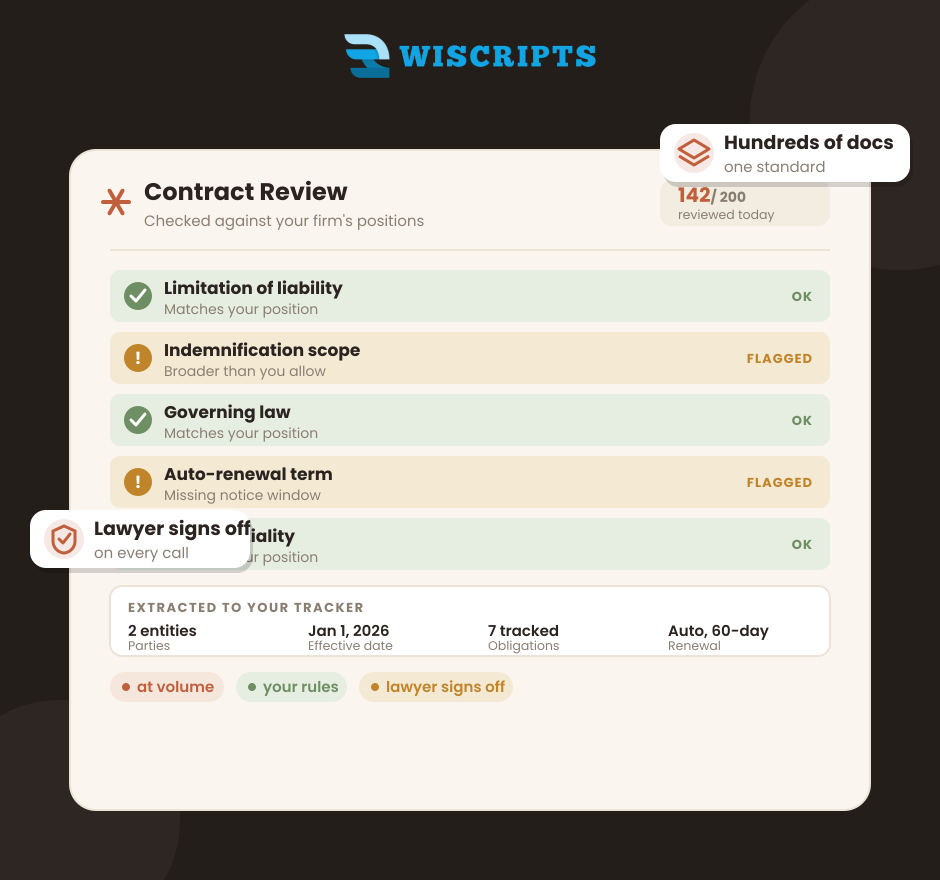
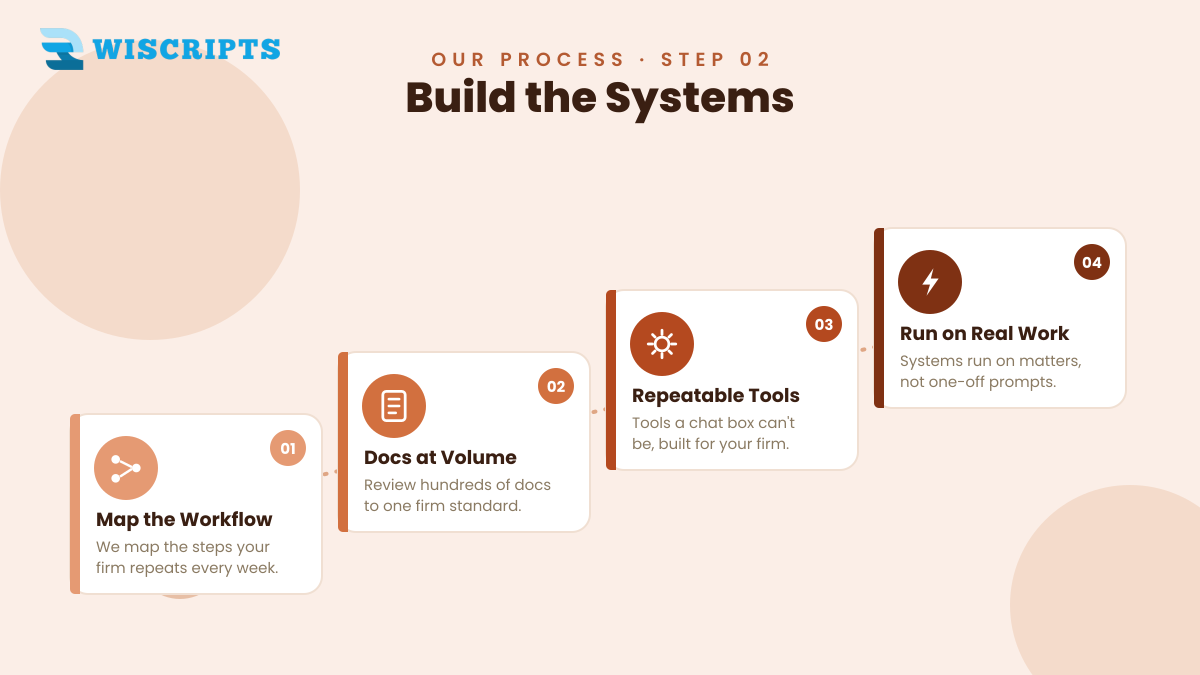
The valuable work is the work that runs on your real matters. Reviewing hundreds of contracts against your firm's own positions, reading intake and pulling the key facts, drafting first-pass documents from your templates, extracting terms and dates into something you can track, and grounding every answer in your firm's files instead of generic knowledge. One lawyer can paste a single document into a chat. Building the system that runs a thousand through consistently, safely, and in your voice is a different discipline, and that's what we deliver.
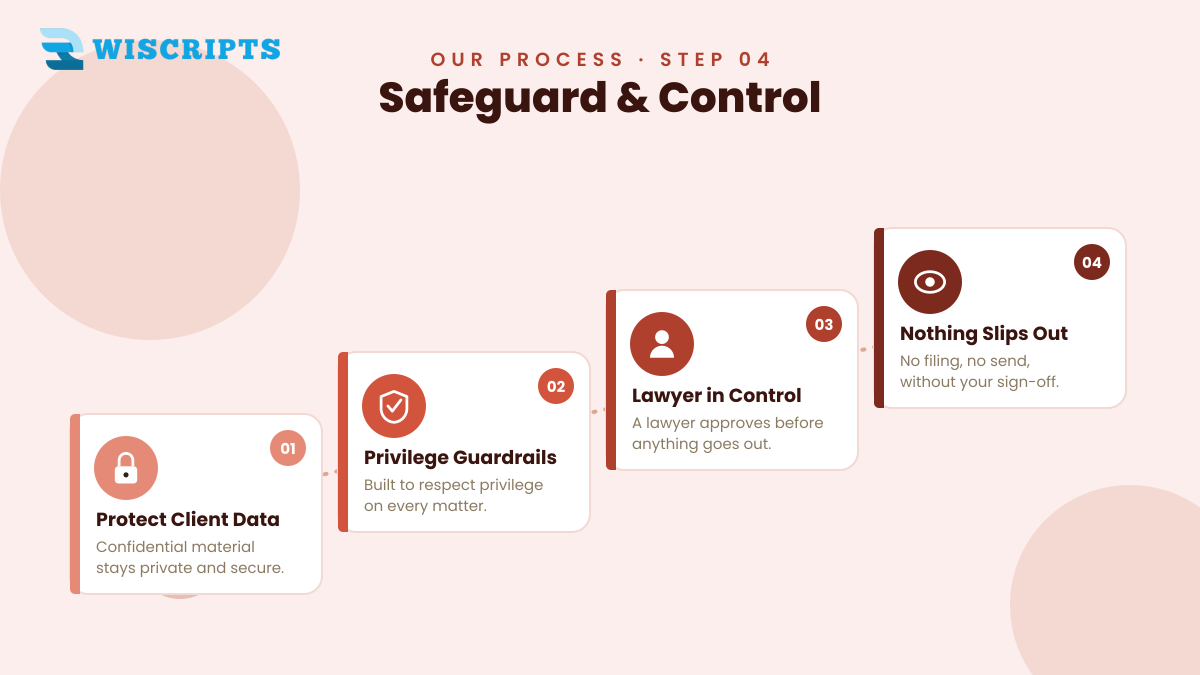
This is the part we take most seriously. Every system we build is designed around confidentiality and privilege from the start, and a lawyer stays in control of anything that goes out. Claude does the heavy lifting; nothing is filed, sent, or relied on until you've approved it. We build the guardrails that make it safe to run AI on real client work, which is exactly the reassurance most attorneys need before they say yes.
Any AI can produce a wrong answer, which is precisely why we build these systems human-in-the-loop rather than fully autonomous. Claude drafts, reviews, and flags; a lawyer approves before anything reaches a client or a court. We also ground its work in your own documents and standards so it's reasoning from your material, not inventing from thin air. The goal isn't magic that runs unsupervised, it's reliable leverage you can actually trust on real matters.
Very little once it's running. There's an upfront phase where we learn your tools, your templates, and how your firm works, so the systems reflect your practice rather than a generic setup. After that, Claude runs quietly inside your workflow and your time is mostly review and approval. The entire point is to take work off your plate, not add another tool you have to babysit.
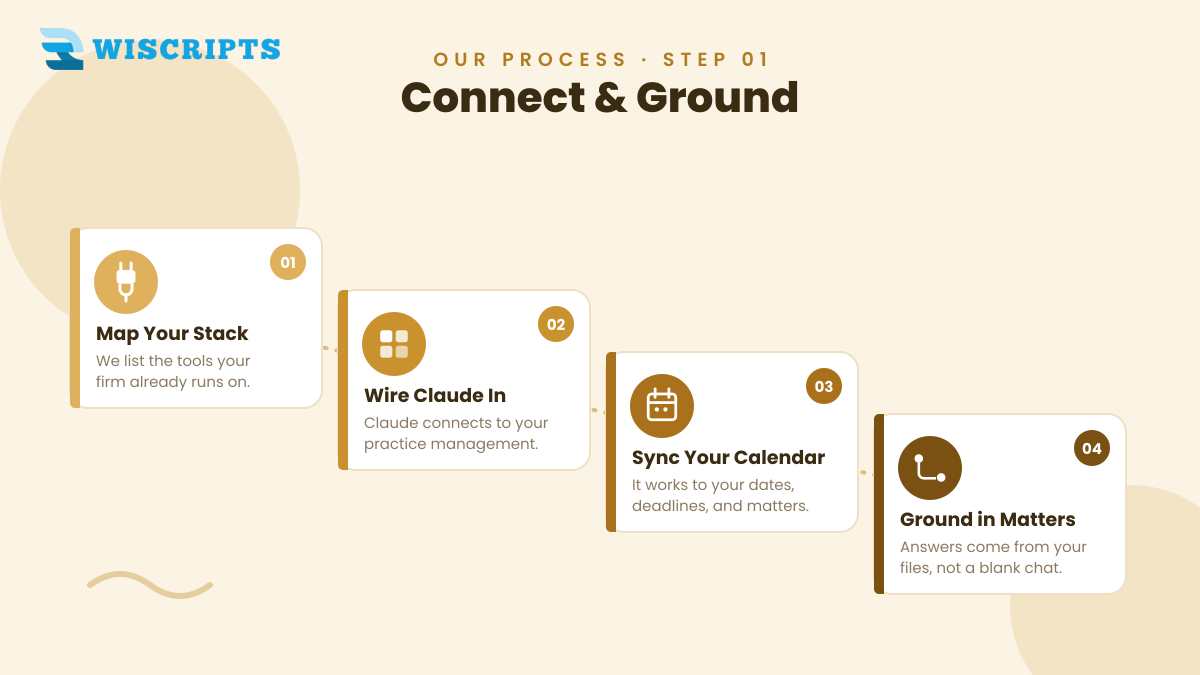
No. We build around your existing stack, not on top of a new one. Claude connects into your practice management, documents, and calendar and works within the rhythm your firm already runs on. You keep your systems; we add the intelligent layer that makes them work harder.
Not at all. The technical layer is our job, not yours. You bring the legal expertise and tell us how your firm works; we handle the connections, the builds, and the safeguards. You interact with the finished result, review what it produces, and stay in control, without ever touching the engineering underneath.
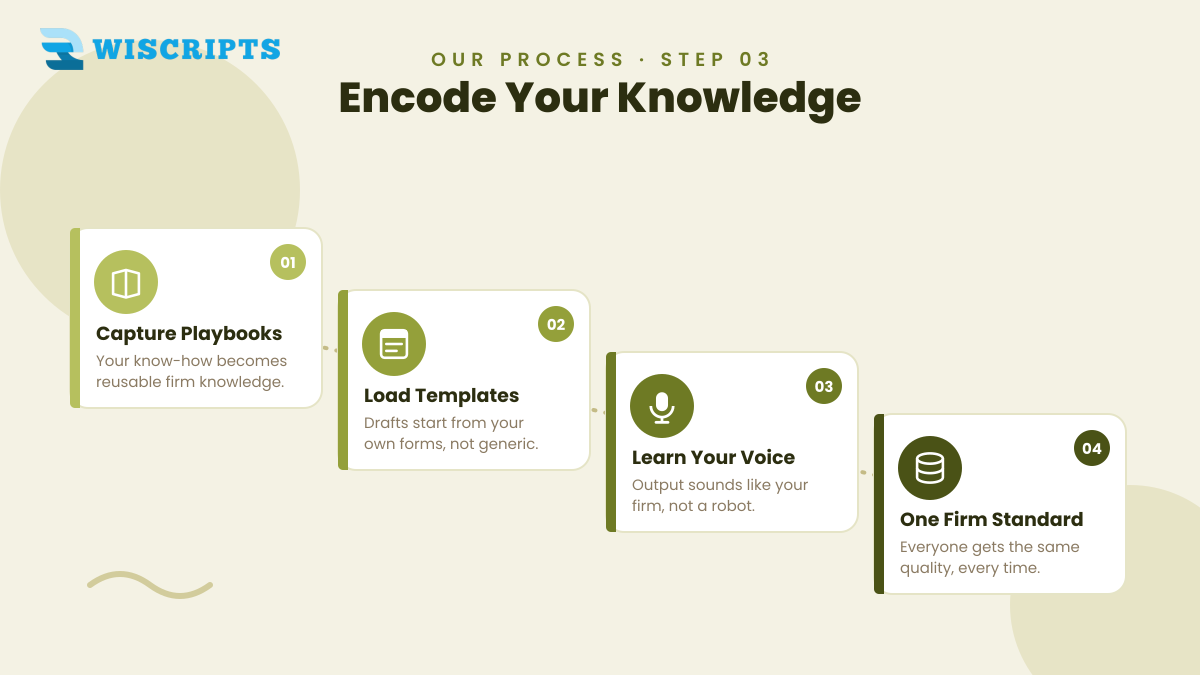
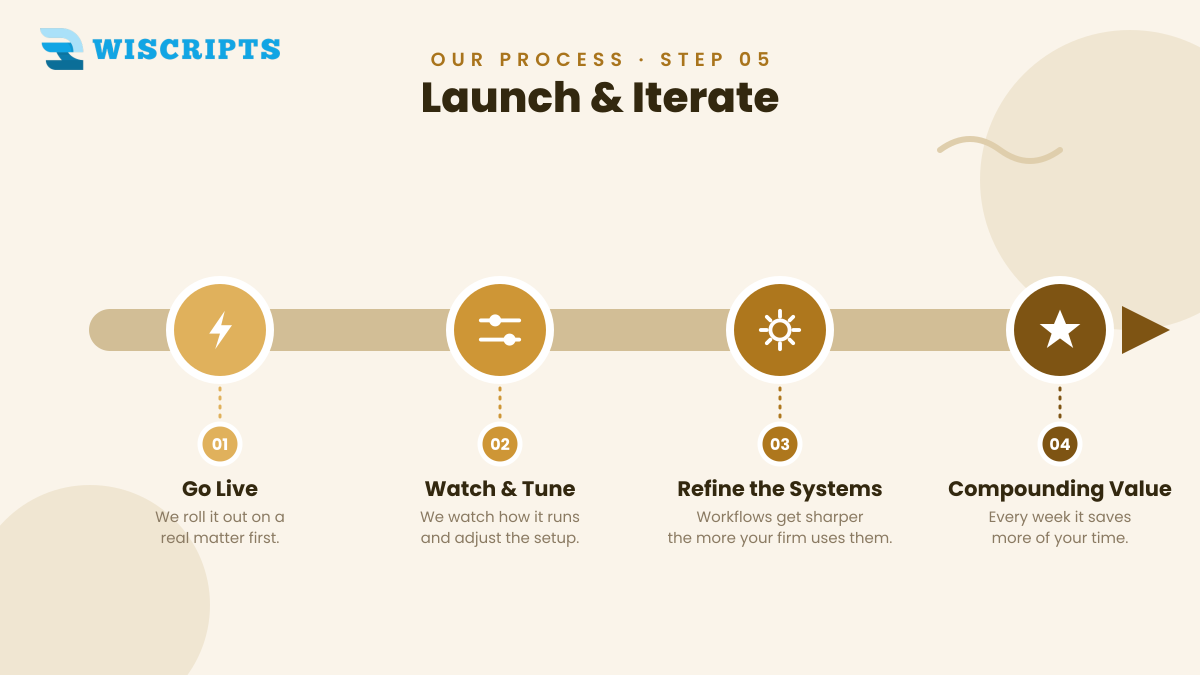
Our service includes: (1) a discovery call to map your tools, workflows, and goals, (2) connecting Claude into your practice management, documents, and calendar, (3) building the workflows your firm repeats, from document review to intake and drafting, (4) encoding your templates, playbooks, and voice so output reflects your firm, (5) document-at-volume review against your firm's standards, (6) confidentiality and privilege guardrails on everything we build, (7) human-in-the-loop approval so a lawyer signs off before anything goes out, (8) a supervised launch on a real matter, and (9) ongoing tuning as your firm uses it.
Then you already understand the gap. A tech-savvy lawyer can prototype something that works most of the time in a demo. Turning that into something that runs reliably on privileged client data, handles edge cases, respects confidentiality, and doesn't slip a bad output into a filing is a different level of engineering. That reliability-and-safety layer is exactly what we do, and it's the difference between an experiment and something your firm can actually depend on.
Anything client-facing or published is built to respect your obligations, including state bar advertising rules, required disclaimers, and confidentiality duties. We keep a lawyer in control of anything that leaves the firm, and we review your jurisdiction's specific rules during onboarding so the guardrails are set before we begin. The compliance layer is built in, not bolted on afterward.
It begins with a discovery call to understand your practice, the tools you run on, and where the time is going. From there we point at one concrete workflow, build it, and launch it supervised on a real matter, so you see it working on your own work before we expand. You grow the system as you get comfortable, always with a lawyer in control.