






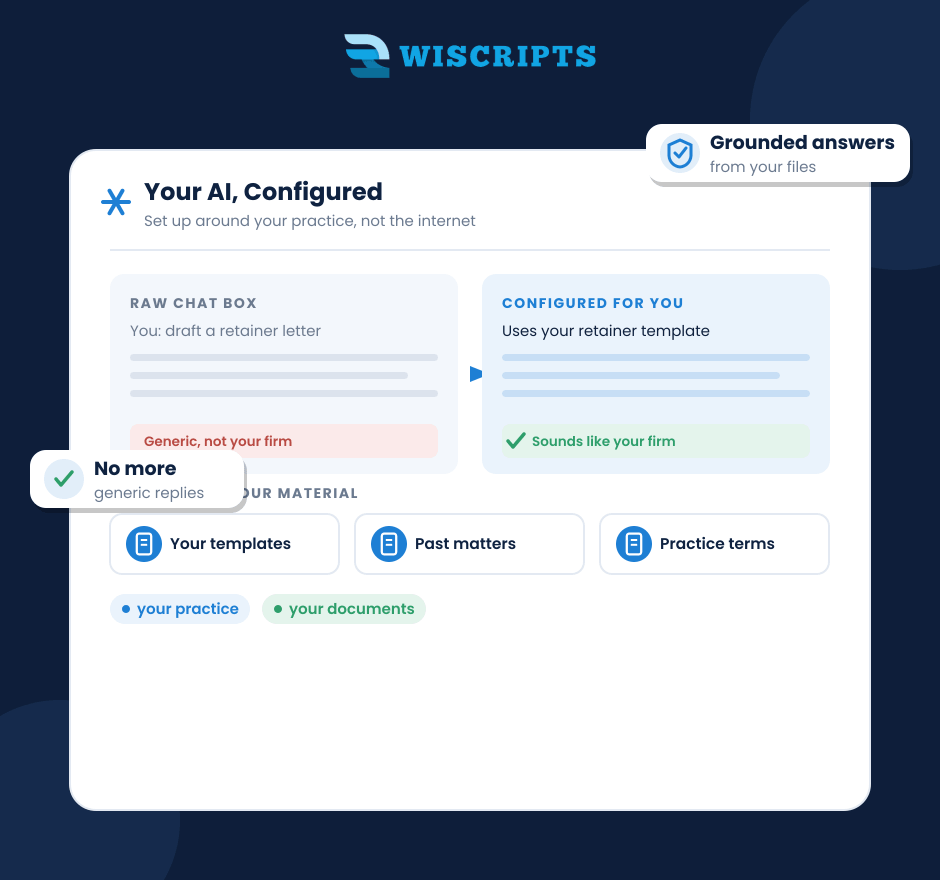



















We take the general-purpose AI you already use, ChatGPT, Copilot, or Gemini, and make it genuinely useful inside your firm. That means configuring it around your practice areas and terminology, grounding it in your own documents and templates, and building custom assistants for the work you repeat, so it does real work on real matters instead of giving generic answers in a separate tab.
You can, and for quick questions you should. But there's a real gap between typing into a chat box and having AI set up to work the way your firm does. On your own, you start every task from a blank prompt, the AI knows nothing about your matters, and it answers from the open internet rather than your material. We close that gap, configuring it, grounding it in your documents, and building the assistants that turn a generic tool into something that actually reflects your practice. That's the part a lawyer can't easily do alone.
They solve different problems and work well together. Workflow automation connects your tools and fires the steps between them, moving information, advancing matters, sending reminders. This service is about the AI itself, making it think and write in a way that's useful to your firm. One runs the plumbing between systems; the other makes the AI genuinely helpful. If you want your AI wired into your intake, documents, and calendar, that's our Workflow Automation service, and we build the two to complement each other.
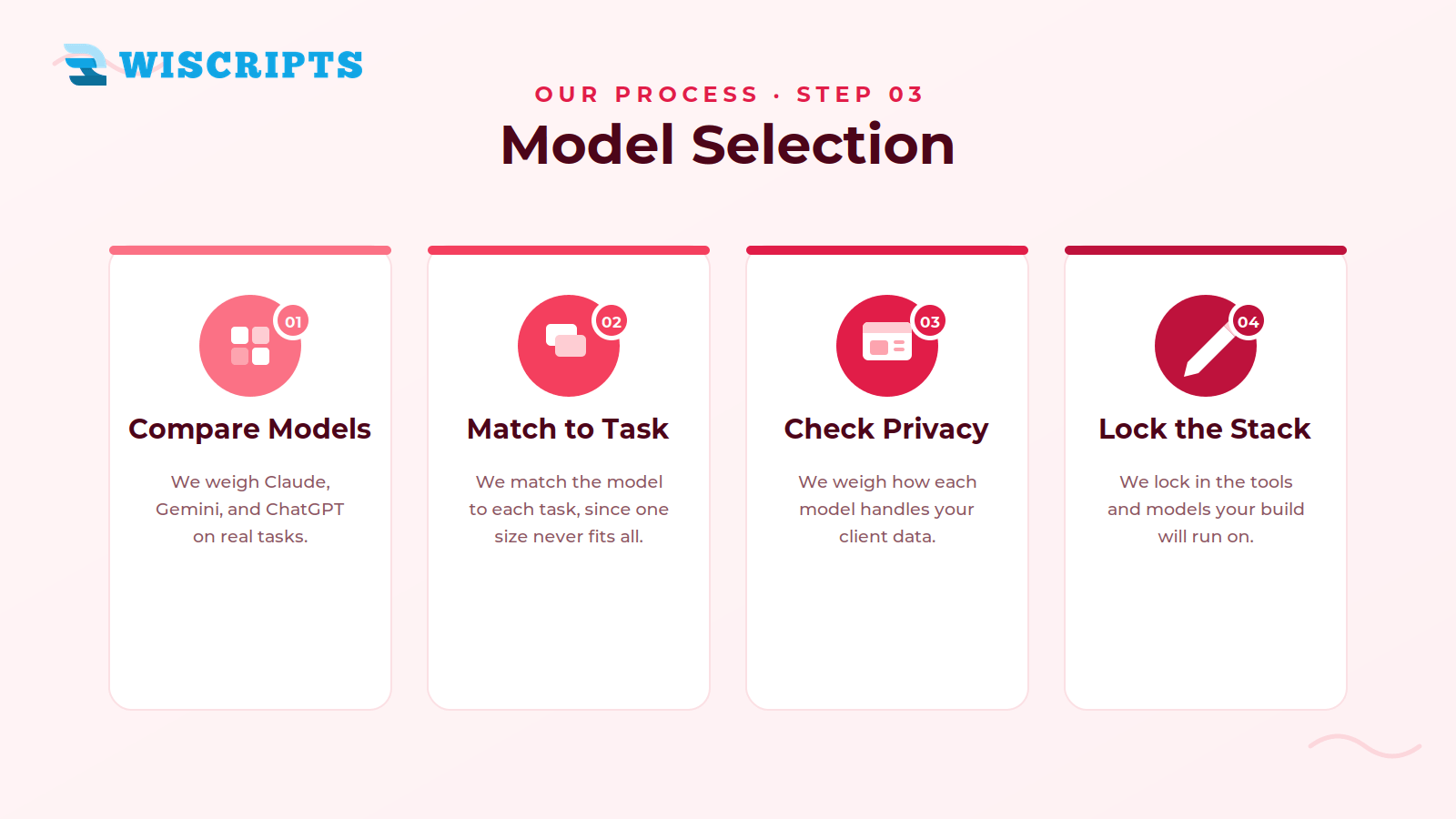
The general-purpose assistants most firms already have or are considering: ChatGPT, Microsoft Copilot, and Gemini. If your firm lives in Microsoft 365, Copilot inside Word and Outlook is often the natural fit; if you're on Google Workspace, Gemini and NotebookLM fit your setup; and ChatGPT is the one most attorneys have already tried. We help you get real value from whichever you're using rather than pushing you toward a particular one.
Those are strong standalone products with their own interface and workflows built in, you buy a seat and use them as they are. Our work is different: we make the general-purpose AI around them actually fit your firm. If you're already using one of those legal platforms, great, they're not what we set up, and we'll be honest about that rather than claim a role we don't have.
No. We work with the AI you've already chosen or already pay for. The whole point is to make your current tool genuinely useful, not to sell you a different one. If part of your setup genuinely can't do what you need, we'll tell you and suggest options, but in most cases we build around what you already have.
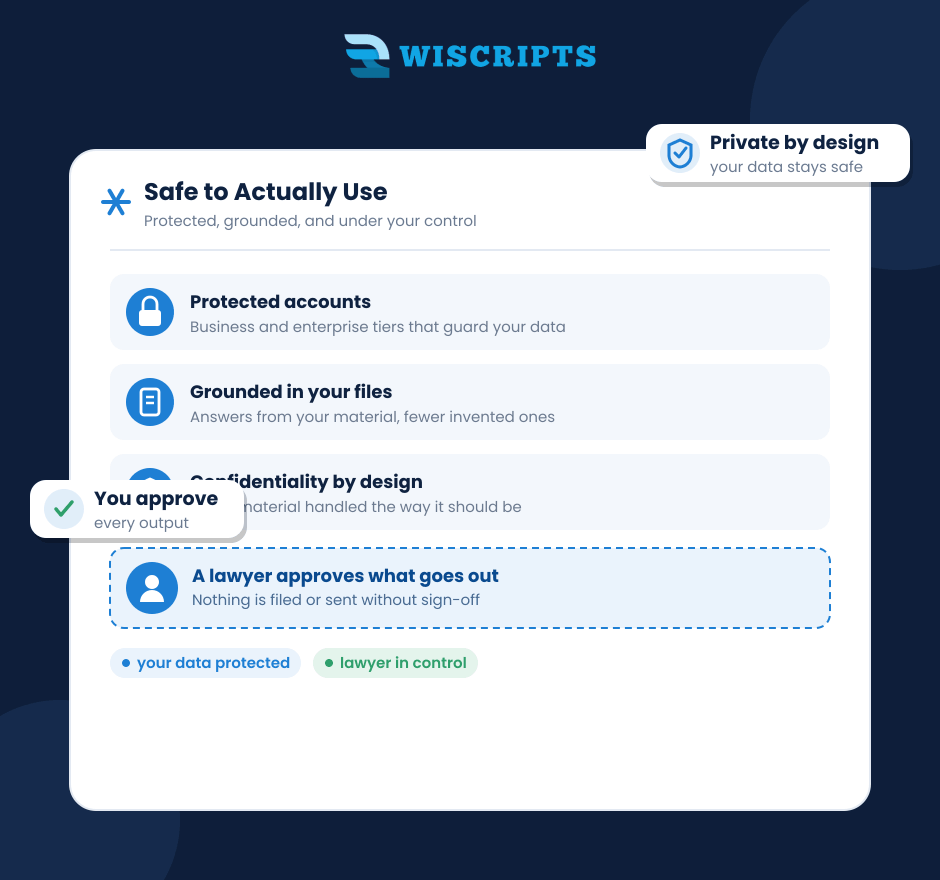
This is the part we take most seriously. We set everything up with confidentiality and privilege in mind, using the business or enterprise versions of these tools that keep your data protected, and configuring them so client material is handled appropriately. A lawyer stays in control of anything that goes out, the AI drafts and assists, but nothing is filed or sent until a person has approved it.
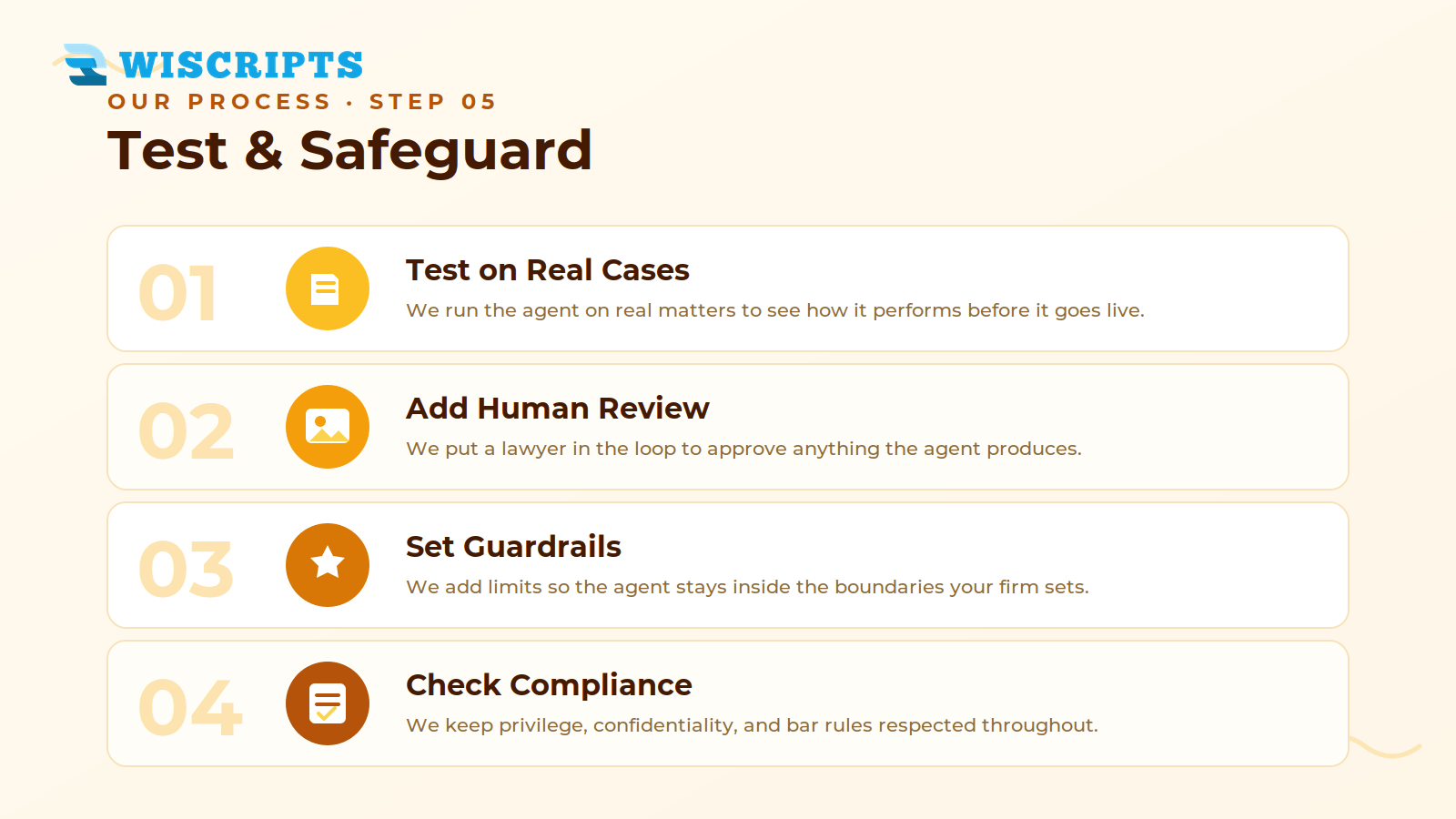
Any general-purpose AI can produce a wrong or invented answer, which is exactly why we don't set it up to run unchecked. We ground it in your own material so it's working from your documents rather than guessing, build in review points where judgment matters, and keep a lawyer approving anything that reaches a client or a court. The goal is reliable help you can trust, not unsupervised output.
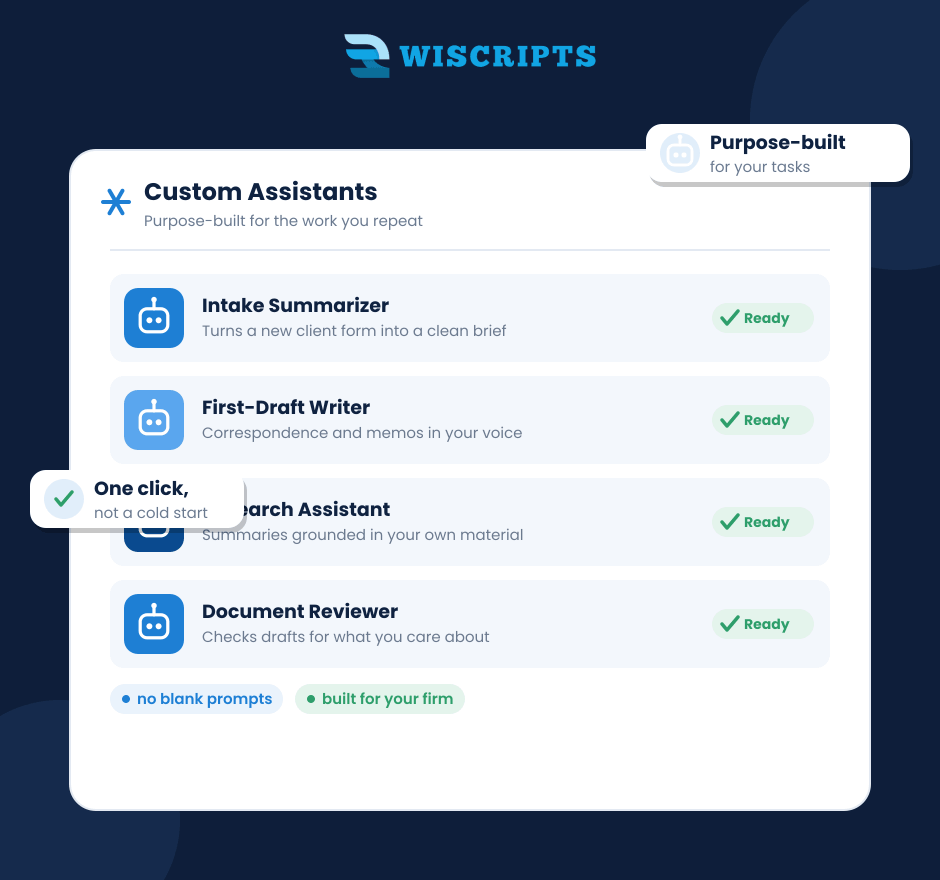
Common examples: summarizing intake and long documents, drafting first-pass correspondence and internal memos, answering questions grounded in your own files, preparing research summaries, and reviewing documents against what you're looking for. We build custom assistants for the tasks your firm repeats most, so your team reaches for a purpose-built helper instead of starting from a blank prompt every time.
Not at all. The setup is our job, not yours. You bring the legal expertise and tell us how your firm works; we handle the configuration, the grounding, and the custom assistants. You end up interacting with something simple and useful, and you stay in control of what it produces.
Most firms are up and running within a couple of weeks, depending on how many assistants we're building and how much of your material we're grounding it in. We start with the highest-impact use case so you feel the benefit quickly, then build out from there.
Not at all, and solos often gain the most. Without a team to delegate to, you're the one doing everything, and a well-set-up AI assistant gives a solo practice real leverage on the routine drafting, summarizing, and review work that eats your day. We scale the build to your size so it fits how you actually work.